


NEWS

Prof Eric Buch, Dean of the Faculty of Health Sciences at the University of Pretoria, in partnership with European Delegation to South Africa, MRC Inflammation and Immunity Unit and the Africa Centre for Health and Population Studies, UKZN, invite members of the media to attend the launch of the 'HIV and TB Resistance & Clinical Management Case Book' that is authored by Dr Theresa Rossouw of UP and Drs Richard Lessells and Tulio de Oliveira of the Africa Centre for Health and Population Studies. The details are as follows:

University of Pretoria invites you to attend the launch of the publication HIV and TB resistance & clinical management case book. The invitation is writen in three official South African languages: Afrikaans, English and Sepedi.

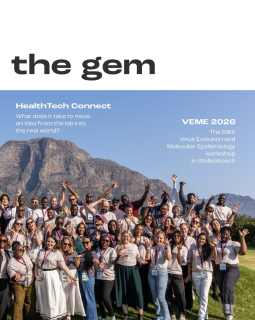
We are announcing the organization of the international workshop on Virus Evolution and Molecular Epidemiology (VEME) in 2013, hosted by the Emerging Pathogens Institute in the warm city of Gainsville and sponsored by several local partners.

Africa Centre, South Africa, 22 February 2013 - Today, colleagues from the Wellcome Trust Africa Centre for Health and Population Studies have published two breakthrough scientific manuscripts at Science.

Organised by the Africa Centre for Health and Population Studies and Southern African Treatment and Resistance Network (SATuRN) in collaboration with the uMkhanyakude District Health Office. This workshop is aimed at developing knowledge and skills around the prevention and management of drug resistance and treatment failure in both HIV and TB.

Viral phylogenies have wide use: studying evolution, tracing the origin of epidemics, establishing dominant mode of transmission, identifying the apparition of drug resistance, even tracking individual body compartments.
The African Centre for Integrated Laboratory Training (ACILT) present the HIV-1 drug resistance practical course, 22-26 April, Johannesburg, South Africa.

Antiretroviral therapy (ART) has converted HIV infection from an almost universally fatal illness to a chronic manageable disease. Adherence to therapy is essential for full viral suppression and optimal immune reconstitution.

By Jon Cohen on December 11, 2012 - Nearly 1.5 million people die from tuberculosis every year, even though most cases can be cured with routine antibiotic treatments. One country's fight to get the ancient scourge under control has an unlikely hero: a simple diagnostic test.

BioAfrica, Southern African Treatment and Resistance Network (SATuRN), and the Africa Centre Bioinformatics Unit use art to present scientific facts in Rural KwaZulu-Natal, South Africa. They are involved in many community engagement activities, presenting to African communities about the origin of HIV, the causes and consequences of drug resistance development, and how to successfully manage HIV and tuberculosis (TB) treatment.
The Health Economics and HIV and AIDS Research Division (HEARD) in collaboration with CAPRISA, SATuRN/Africa Centre and the University of KwaZulu-Natal Press hosted Getting to Zero: Showcasing KZN Research on HIV and AIDS on 14 November at the KZNSA Gallery.

KUALA LUMPUR, MALAYSIA, 14-17 Nov 2012, SATuRN researchers Dr. Richard Lessells and Dr. Tulio de Oliveira had a very successful TB conference. In this post we cover their presentations, workshops participation and tweeter coverage.

DURBAN, SOUTH AFRICA, 14 Nov 2012. We have organized and presented an event at the KZN National Art Gallery that portrait our DNA sequencing and Art & Science work.

SATuRN is presenting a talk at the KwaZulu-Natal Research Institute for Tuberculosis and HIV (K-RITH) opening. This symposium has a fantastic scientific program, with some of the leading researchers and funders in the world! Please follow our tweeter coverage!
SATuRN activities were highlighted at the LSHTM TB Centre Annual Retreat, which was held in Downing College, Cambridge.

Researchers based in northern KwaZulu-Natal in rural South Africa are exploring the impact of novel molecular tuberculosis diagnostic system on clinical outcomes for patients with multidrug-resistance TB.
In this third issue of our newsletter we have included interesting news, blogs, reports, tweets, publications and training information produced by our network. We hope you enjoy it and find it informative. We welcome any feedback about content or format.

By BIANCA CAPAZORIO - A BABY girl who contracted HIV after being breast-fed by a well-meaning aunt has become the first proven case in SA to have contracted HIV from a surrogate feeder or 'wet nurse'.

A baby girl who contracted HIV after being breast-fed by a well-meaning aunt has become the first proven case in South Africa to have contracted HIV from a surrogate feeder or 'wet nurse'. The case contained in new research highlights the importance of HIV testing of mothers and surrogate feeders at a time when the government is phasing out free infant formula in its clinics.

The Africa Centre for Health and Population Studies, Zululand's HIV-AIDS research hub based near Mtubatuba, has revealed the first proven HIV surrogate transmission case in South Africa.
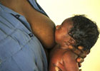
DNA sequencing has provided evidence of HIV-1 transmission from an infected woman breastfeeding her niece in South Africa, drawing attention to infant feeding practices and the need for HIV testing of all breastfeeding surrogates as well as mothers.

A case where an aunt infected her niece with HIV through breastfeeding has drawn attention to feeding practices in South Africa. The case was published in the medical journal Lancet and highlighted the risk of HIV transmission from a surrogate carer, the Africa Centre for Health and Population Studies said today.

Sequencing-based diagnostics for human immunodeficiency virus (HIV)-infected individuals will be carried out in Africa in order to determine resistance to antiretroviral drugs.

During July, the acclaimed researcher, Dr Tulio de Oliveira from the Southern African Treatment Research Network (SATuRN), was invited to CAPRISA to visit CAPRISA's eThekwini Clinical Research Site. He also presented latest developments on affordable HIV and TB drug resistance testing and open access, public, drug resistance databases to CAPRISA's management team, followed by discussions on possible opportunities for collaboration.

By Nancy A. Melville - WASHINGTON, DC - July 27, 2012 - As antiretroviral therapy (ART) for HIV becomes widely accessible in Southern Africa, the risk for drug resistances is on the rise, and as many as 1 in 6 adults show acquired drug resistance to standard second-line drug regimens, researchers said here on July 24 at the 19th International AIDS Conference.

NEW YORK (GenomeWeb News) - Life Technologies today announced a collaboration with the Southern African Treatment and Resistance Network (SATuRN) covering sequencing-based diagnostics for HIV patients in Africa.

Life and Southern African Treatment and Resistance Network (SATuRN) Partner in Sequencing-Based Surveillance of Drug Resistance

Life Technologies Corporation announced a collaboration with the Southern African Treatment and Resistance Network (SATuRN) on sequencing-based diagnostics for HIV-infected individuals in Africa.

WASHINGTON (By Erin Loury, LA Times) - Scaling up the distribution of HIV medication over the last decade has vastly increased the number of people receiving treatment around the world. An estimated 8 million infected people received the antiretroviral drugs in 2011, compared to just 400,000 in 2003.

Drug-resistant HIV has been increasing in parts of sub-Saharan Africa over the last decade, according to experts writing in the Lancet
MOST POPULAR
BLOG

KRISP has been created by the coordinated effort of the University of KwaZulu-Natal (UKZN), the Technology Innovation Agency (TIA) and the South African Medical Research Countil (SAMRC).


Location: K-RITH Tower Building
Nelson R Mandela School of Medicine, UKZN
719 Umbilo Road, Durban, South Africa.
Director: Prof. Tulio de Oliveira