
After Two Decades of Gains, HIV Progress in KwaZulu-Natal Has Stalled Since 2019, Lancet HIV Study Finds
[caption id="attachment_3369" align="alignnone" width="930"]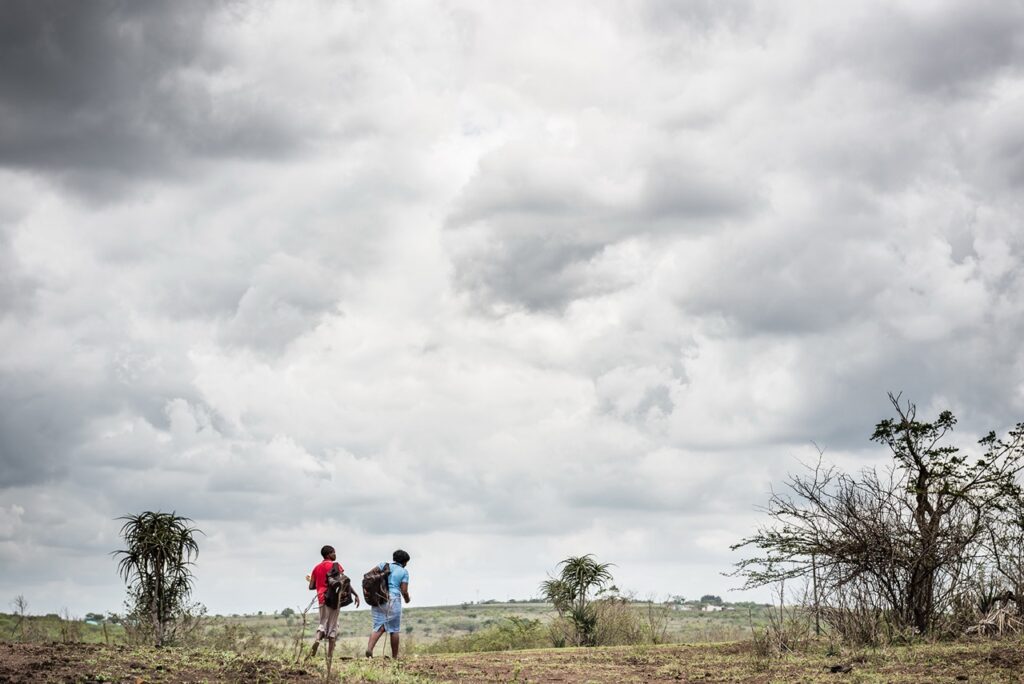 ABOVE: Field workers from the Africa Centre carrying out population surveillance in rural villages. 2016. Photo: AHRI[/caption]
South Africa’s HIV response has transformed the course of the epidemic over the past two decades, with expanded treatment and prevention contributing to substantial declines in new infections and improvements in survival.
Now, this long-running population-based HIV cohort is providing a detailed picture of that progress – and showing where the next phase of the response needs to focus.
An international study published in The Lancet HIV this week found that overall HIV incidence in a rural KwaZulu-Natal population fell by 55% between 2010 and 2024–25, with particularly steep declines between 2013 and 2018. However, progress has largely stalled since 2019, with some key epidemic-control measures beginning to reverse, highlighting the need to adapt prevention and treatment strategies to sustain the gains already achieved.
The findings come from more than two decades of population-based HIV surveillance by the Africa Health Research Institute (AHRI), analysed by researchers from AHRI, Stellenbosch University’s South African Centre for Epidemiological Modelling and Analysis (SACEMA) and Centre for Epidemic Response and Innovation (CERI), and international partners. Professor Frank Tanser (pictured below), based at both AHRI and SACEMA/CERI, is the study’s senior author.
“South Africa has made extraordinary progress against HIV over the past two decades,” says Prof Tanser. “These data show what sustained investment in treatment and prevention can achieve. They also give us a clear picture of where we now need to focus to protect those gains and accelerate progress towards epidemic control.”
Two Decades of Progress
Between 2013 and 2018, annual HIV incidence fell by 52.2% among males and 36.9% among females. Across the longer period, overall incidence declined from 3.32 new infections per 100 person-years in 2010 to 1.49 in 2024–25 – an overall reduction of 55%.
Population-level viral control also improved dramatically during much of the study period. Between 2011 and 2018, detectable viraemia among people living with HIV fell by 44.5% in males and 50.5% in females, reflecting the impact of expanded antiretroviral treatment.
Another key measure of epidemic control – the incidence-to-prevalence ratio – fell by 74.2% between 2006 and 2022, moving close to the benchmark associated with epidemic control.
Where Progress Is Slowing
The most recent data, however, show a clear loss of momentum. The researchers found no evidence of a continued decline in HIV incidence between 2019 and 2025 among either females or males.
After years of improvement, detectable viraemia increased by 9.6 percentage points between 2019 and 2025, while the incidence-to-prevalence ratio stalled above the epidemic-control benchmark after reaching its lowest recorded level in 2022.
“These results provide a timely insight into the changing dynamics of the HIV epidemic,” says lead author Elphas Okango. “This should be a call to action. We need to build on the successes of the past but use the tools we have at our disposal more effectively to drive the epidemic towards elimination.”
The substantial gains of the past two decades remain clear, but the findings show that further progress cannot be taken for granted – and that the next phase of South Africa’s HIV response will need to evolve with the epidemic.
Expanding Who We Need to Reach
The study highlights important differences by age and sex that can help guide more targeted prevention and treatment strategies.
HIV incidence has continued to decline among younger adults aged 15–34, but these gains are being offset by stalled or increasing incidence among adults aged 35–54. The researchers say this points to the need for prevention programmes that reach people across a broader range of ages.
The lifetime risk of acquiring HIV has also fallen substantially over the course of the study, but remains high – particularly for women. Based on the age-specific incidence rates observed between 2019 and 2025, the estimated cumulative risk of acquiring HIV between ages 15 and 54 was 53% for females and 32% for males, assuming those incidence patterns persisted and excluding the competing risk of death.
These patterns provide an opportunity to focus interventions more precisely on the groups and stages of life where additional gains can now be made.
Data That Can Guide the Next Phase
The study draws on AHRI’s health and demographic surveillance system in rural KwaZulu-Natal, one of the world’s largest population-based cohorts with over two decades of ongoing longitudinal HIV data collection.
Among 42,662 participants who initially tested HIV negative and were subsequently recontacted, 29,702 underwent repeat HIV testing. Across more than 182,000 person-years of observation, researchers recorded 4,852 new HIV infections.
The longitudinal data allowed researchers to examine HIV incidence, viral suppression, lifetime acquisition risk, and other epidemic-control measures in exceptional detail.
“The power of this data from AHRI’s health and demographic surveillance system lies in its depth and continuity. By following the same population over more than two decades, we can see changes in the epidemic that would be difficult to capture through periodic surveys alone. This gives us a much clearer picture of where we are making progress, where we are losing momentum, and where targeted action could make the greatest difference,” said AHRI Director of Science and study co-author Dr Kobus Herbst.
While the cohort is based in rural KwaZulu-Natal and is not nationally representative, its long-term, high-resolution data provide an important window into epidemic dynamics in one of South Africa’s highest HIV-burden settings.
The Tools to Change Course Are Already Here
Importantly, the researchers emphasise that the recent slowdown is not irreversible. The tools needed to accelerate progress already exist.
They point to tailored prevention options for different risk groups, stronger initiation of and adherence to antiretroviral therapy, more flexible and patient-centred services, and long-acting agents for HIV prevention and treatment as important opportunities for the next phase of the response.
Taken together, these findings challenge the assumption that progress towards HIV epidemic control will continue without renewed action. While South Africa has made substantial gains, the recent slowdown highlights the need to reassess strategies, strengthen the response, and plan beyond the UNAIDS 2030 targets.
The findings come at a time of growing uncertainty in global HIV financing, reinforcing the importance of sustaining the programmes that have driven progress while adapting them to the changing epidemic. The authors call for coordinated action across research, policy, government, civil society, and international funding partners to ensure that proven tools are implemented effectively and sustained.
[caption id="attachment_3367" align="alignnone" width="863"]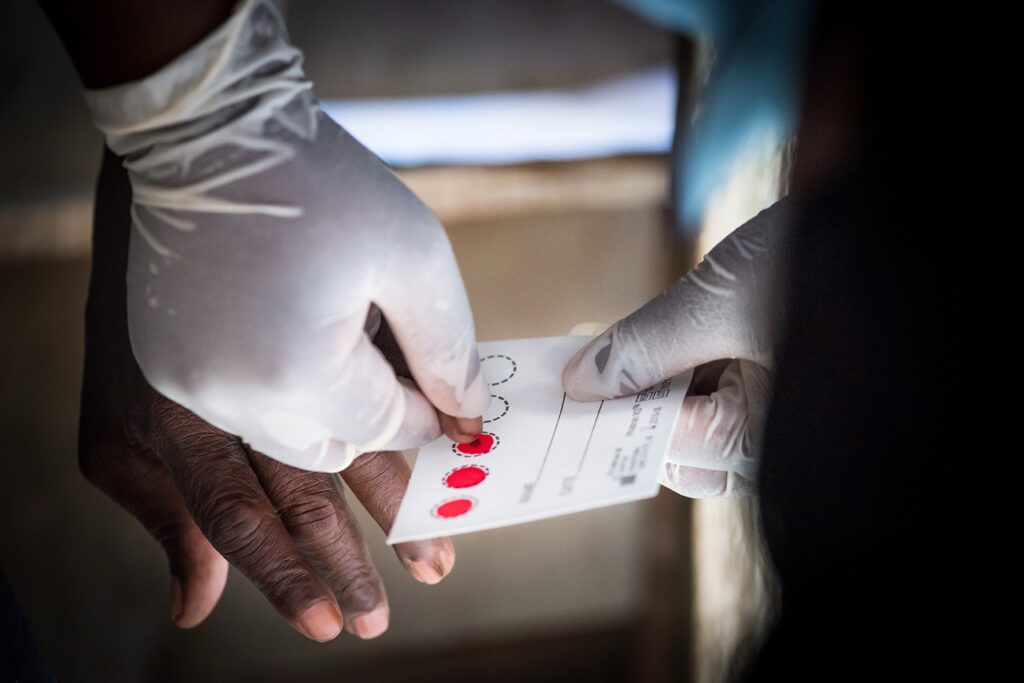 ABOVE: Field workers from the Africa Centre carrying out population surveillance in rural villages. 2016. Photo: AHRI[/caption]
The study, “Epidemiological trends of HIV among individuals aged 15–54 years in South Africa from 2004 to 2025: a population-based, longitudinal cohort study,” by Elphas Okango, Margot Otto, Khai Hoan Tram, Adrian Dobra, Hae-Young Kim, Paul Mee, Maxime Inghels, Diego Cuadros, Anna Bershteyn, Dickman Gareta, Till Bärnighausen, Andrew Tomita, Henry Mwambi, Kobus Herbst, and Frank Courteney Tanser, was published online in The Lancet HIV on 7 October 2026.
The study was funded by the National Institute of Mental Health.
Read the full study here: https://www.thelancet.com/journals/lanhiv/article/PIIS2352-3018(26)00180-3/fulltext
About SACEMA
The South African Centre for Epidemiological Modelling and Analysis (SACEMA), based in Stellenbosch University's School for Data Science and Computational Thinking, develops and applies quantitative methods to understand disease dynamics and support evidence-informed public health decision-making. SACEMA is part of the Centre for Epidemic Response and Innovation (CERI), which works to strengthen Africa's capacity to detect, understand, and respond to epidemic threats through genomics, data science, and innovation.
About Africa Health Research Institute
Africa Health Research Institute (AHRI) is an independent, multidisciplinary research institute based in KwaZulu-Natal, South Africa. AHRI addresses complex and urgent health challenges facing under-resourced communities in South Africa, contributing critical new knowledge and informing policy and practice globally. Its long-running population-based health and demographic surveillance system provided the longitudinal HIV data analysed in this study.
Media Contacts
Stellenbosch University
Maambele Khosa
Head: Communications and Marketing (CERI)
Maambele@sun.ac.za
+27 79 592 9174
Africa Health Research Institute
Hannah Keal
Comms, Brand & Media lead
hannah.keal@ahri.org
+27 83 294 3380
News date: 2026-10-08
Links:
KRISP has been created by the coordinated effort of the University of KwaZulu-Natal (UKZN), the Technology Innovation Agency (TIA) and the South African Medical Research Countil (SAMRC).


Location: K-RITH Tower Building
Nelson R Mandela School of Medicine, UKZN
719 Umbilo Road, Durban, South Africa.
Director: Prof. Tulio de Oliveira