
Using AI to Anticipate Poliovirus Risk

Poliovirus can circulate without being noticed. Most people infected with the virus do not develop paralysis, making surveillance critical for identifying transmission before cases emerge.
Olivier Adjagba, an MSc student at the South African Centre for Epidemiological Modelling and Analysis (SACEMA) and the Centre for Epidemic Response and Innovation (CERI), is exploring whether artificial intelligence can help provide an earlier warning.
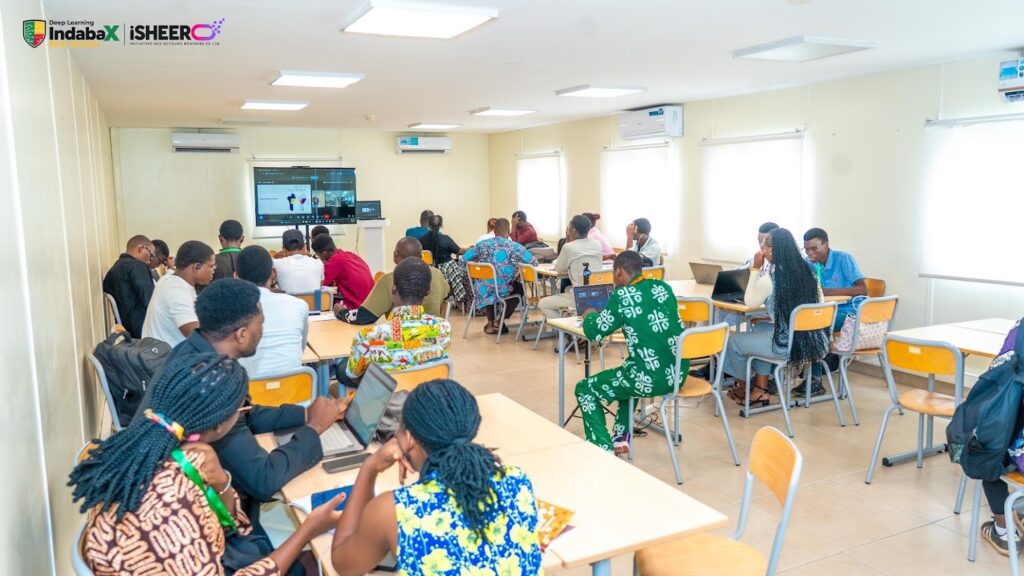
Olivier recently presented part of his MSc research at IndabaX Benin, where he shared a deep-learning approach developed to forecast where poliovirus type 2 (PV2) may be detected across Africa.
The model uses recent information from individual countries to estimate the likelihood of PV2 being detected through a paralytic case or sewage surveillance during the following six months.
“The aim is to provide an early warning that could help public-health teams identify countries requiring closer attention,” Olivier explains.
Predicting where the virus may appear is challenging. Detection depends not only on whether the virus is circulating, but also on the strength of surveillance systems, including how frequently sewage samples are collected and tested. Available data also vary in completeness and quality between countries.
Olivier’s approach combines a normalising flows model with temporal encoders – including GRU, LSTM, and Transformer models – to identify patterns in data over time. The models draw on surveillance, immunity, vaccination, demographic, socioeconomic, environmental, and security indicators.
When compared with more traditional machine-learning approaches, the deep-learning models performed better on later test data, with the GRU-based model producing the strongest and most consistent results.
Importantly, sewage-surveillance data contributed most to the forecasts.
“Sewage testing can detect the virus even when no paralytic cases have appeared,” Olivier says.
The approach could therefore help identify countries and periods requiring closer monitoring or strengthened surveillance, although he emphasises that it should support rather than replace expert public-health assessment.
Olivier participated in IndabaX Benin online, but says the event provided an opportunity to share the research with an African audience interested in applying artificial intelligence to challenges affecting the continent.
“It also helped me think about how to explain the work clearly and how its results could be made useful to public-health teams.”
News date: 2026-10-06
Links:
KRISP has been created by the coordinated effort of the University of KwaZulu-Natal (UKZN), the Technology Innovation Agency (TIA) and the South African Medical Research Countil (SAMRC).


Location: K-RITH Tower Building
Nelson R Mandela School of Medicine, UKZN
719 Umbilo Road, Durban, South Africa.
Director: Prof. Tulio de Oliveira