
Connecting Climate Science
How can research better capture the mental health impacts of climate change, and how can scientific evidence inform policy and action? These questions shaped the international workshop Climate Change and Mental Health: Comparative Risk Pathways, Vulnerability, and Resilience, jointly hosted by the Academy of Science of South Africa (ASSAf) and the German National Academy of Sciences Leopoldina at the University of Pretoria from 8 to 10 September 2026.
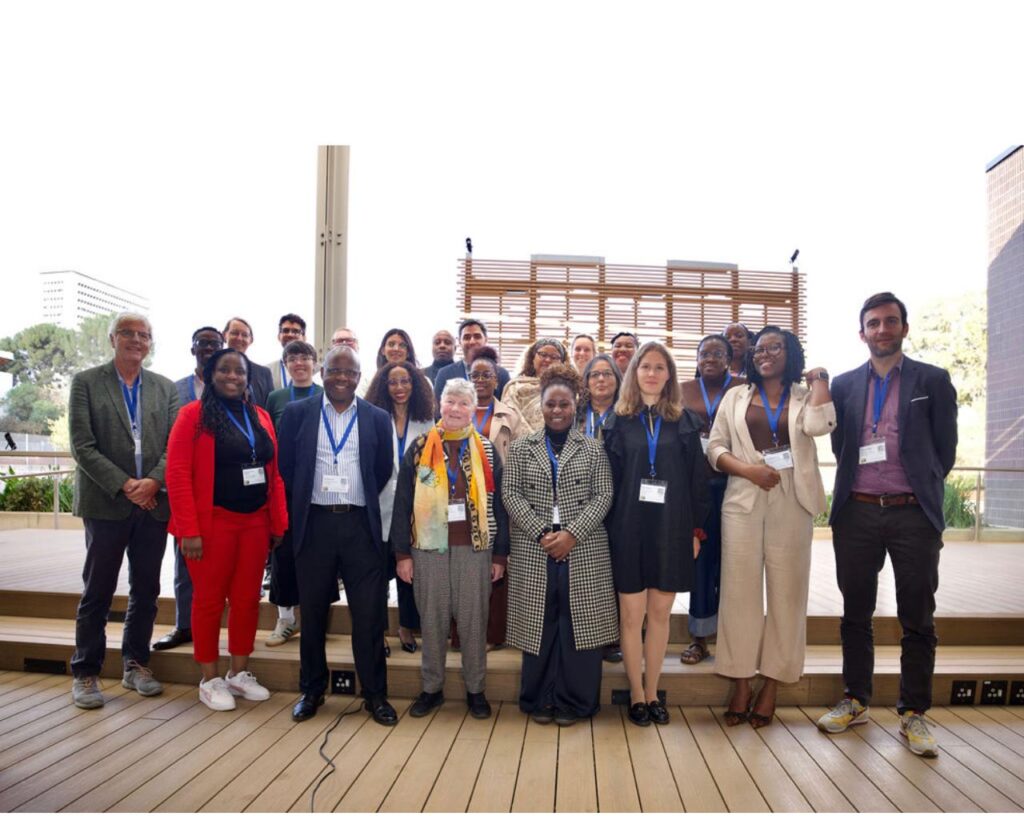
The workshop brought together 13 selected early-career researchers-seven from South Africa and six from Germany-alongside established scholars. For me, participating in this highly competitive international gathering was an opportunity to share my research, learn from colleagues working in different contexts, and reflect on how collaboration can advance climate change and mental health research.
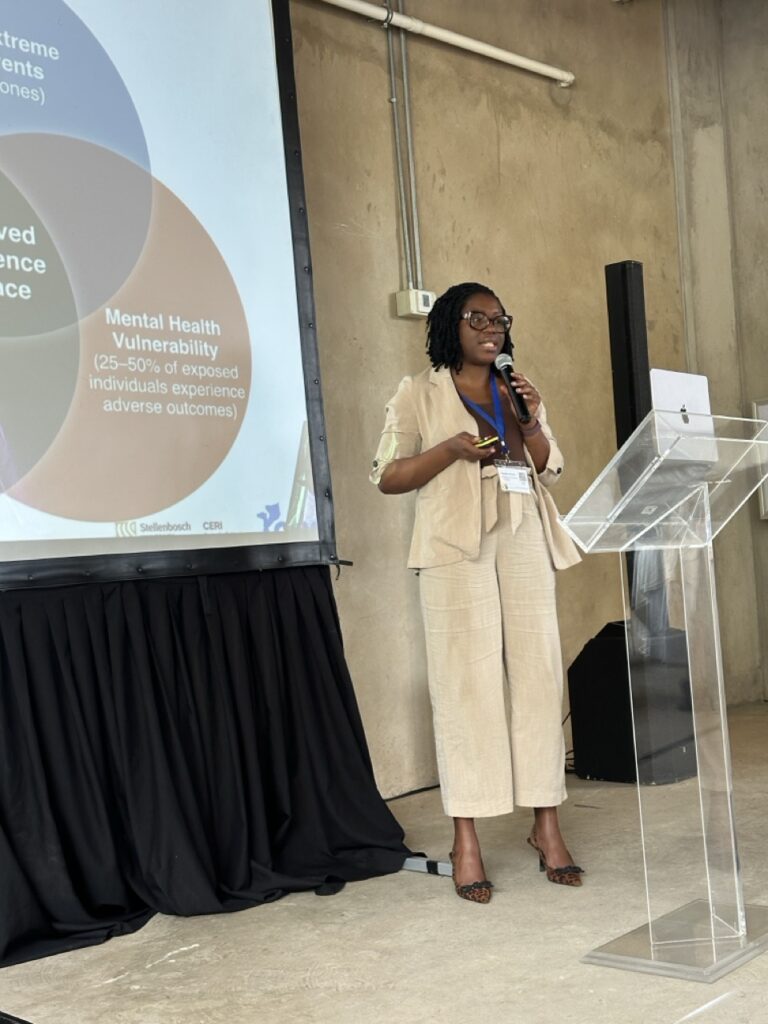
I opened the early-career researcher presentations with my talk, “Climate Change and Mental Health in Africa: A Multi-Country Analysis of Lived Experiences and Pathways Following Extreme Weather Events.” Drawing on findings from the Wellcome Trust-funded WEMA project, I presented insights from a participatory digital storytelling study involving 37 community-based co-researchers across South Africa, Mozambique, Burkina Faso and Kenya. The research explored how people experience the mental health impacts of extreme weather events within the social, material and environmental conditions of their everyday lives. It highlighted how distress can persist beyond the immediate event, particularly when recovery is incomplete and communities remain exposed to further environmental threats.
Broadening perspectives through scientific exchange
Across the first two days, keynote speakers and early-career researchers presented their work and engaged in discussions on the challenges and opportunities in climate change and mental health research. The conversations highlighted the need for more longitudinal studies to understand how mental health outcomes evolve over time, as well as the value of perspectives such as positive psychology and exposome science.
Participants also reflected on gaps in the evidence base, including the need to investigate a wider range of climate-related events, such as wildfires, and to strengthen facility-based research examining healthcare admissions in relation to environmental exposures. These discussions reinforced the importance of expanding research capacity and integrating mental health more meaningfully into climate adaptation planning.
From dialogue to policy
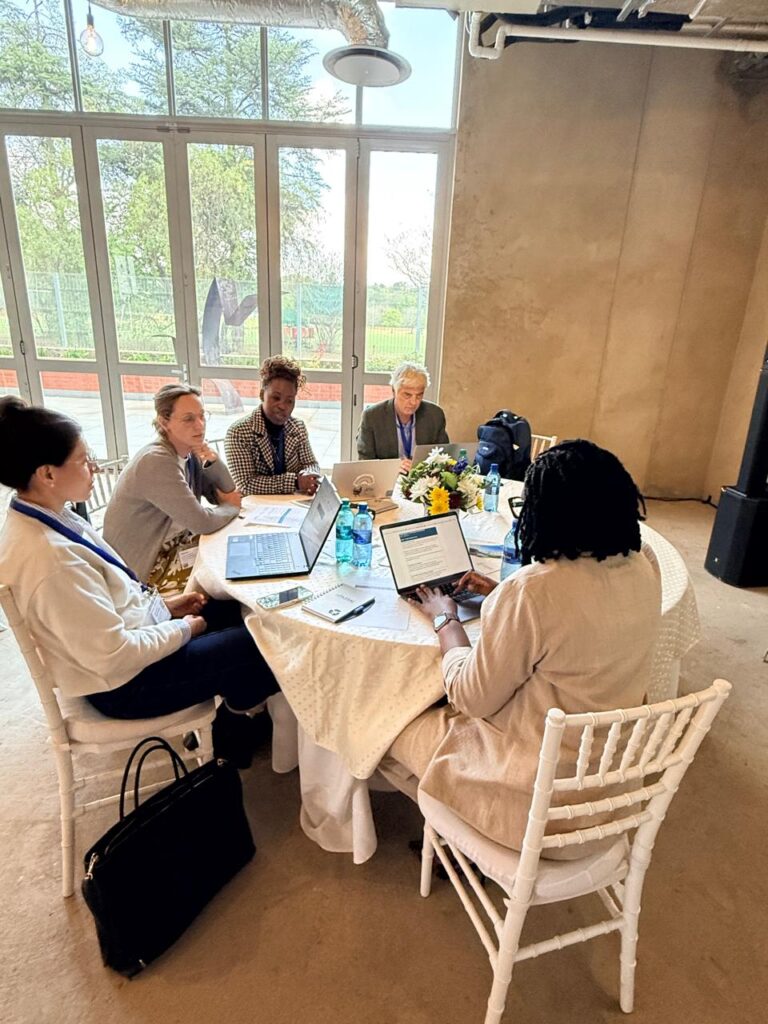
One of the most engaging elements of the workshop was the World Café, which brought researchers together in small, mixed-country groups. Each group included two South African researchers and one German researcher. Four thematic tables explored extreme weather events and mental health, heat and mental health, community vulnerabilities and mental health, and policy.
As groups rotated between tables, participants responded to guiding questions, exchanged perspectives and built on one another’s contributions. The discussions were subsequently synthesised into a draft policy brief, connecting the scientific exchange with shared research priorities and policy recommendations.
The final day focused on consolidating the research gaps and recommendations emerging from these conversations. Senior researchers encouraged us to look beyond our individual projects and consider the broader implications of our work. This collective reflection demonstrated the value of engaging across disciplines and national contexts to identify questions that may otherwise remain overlooked.
The value of international collaboration
The workshop was a reminder that, while climate-related mental health challenges are experienced differently across countries, there are important opportunities for shared learning. South Africa and Germany bring different environmental, social and health-system contexts to these discussions. Bringing researchers together made it possible to explore common concerns while recognising the importance of context-specific evidence.
For me, one of the most valuable outcomes was the opportunity to present my work, engage with established scholars, and learn from early-career researchers whose approaches and experiences differed from my own. The workshop demonstrated how international scientific dialogue can move beyond sharing findings to identifying research gaps, strengthening collaboration and informing policy.
For CERI, these exchanges reflect the value of interdisciplinary research and international collaboration in addressing complex and emerging public health challenges. They also create opportunities to connect climate-related health research with broader conversations about population health and evidence-informed responses.
As climate-related events continue to affect communities, sustained collaboration will be essential to producing evidence that reflects lived experiences and supports meaningful responses. The ASSAf-Leopoldina workshop offered an important space to advance that conversation.
text: Dr Chanelle Mulopo photos: Supplied
News date: 2026-10-06
Links:
KRISP has been created by the coordinated effort of the University of KwaZulu-Natal (UKZN), the Technology Innovation Agency (TIA) and the South African Medical Research Countil (SAMRC).


Location: K-RITH Tower Building
Nelson R Mandela School of Medicine, UKZN
719 Umbilo Road, Durban, South Africa.
Director: Prof. Tulio de Oliveira