


NEWS
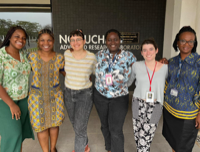
CERI has welcomed Prof Carla Mavian, an infectious disease genomicist whose work spans evolutionary biology, phylodynamic,s and real-time outbreak response. Her appointment marks a significant step in embedding a comprehensive One Health framework within CERI’s continental pathogen surveillance efforts.
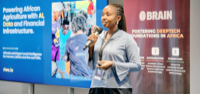
This month, CERI partnered in hosting BRAIN 5.0 in South Africa, convening founders, investors, and researchers to move science-based innovation from the lab into real-world health and climate impact.
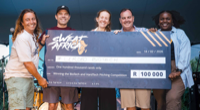
On 14 February 2026, under the main tent at Bertha Retreat between Stellenbosch and Franschhoek, Africa’s most promising biotech and hardtech founders took to the stage for the final of the SWEAT Africa Pitch Competition. With a winner-take-all R100 000 cash prize on the line, the stakes were high – and the standard even higher.
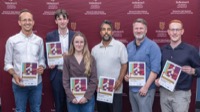
Stellenbosch University’s (SU) Policy Innovation Lab is part of an international partnership that has formally handed over a landmark policy report tracing the evolution of the G20’s digital agenda to South African government partners.
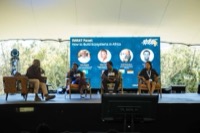
SWEAT Panel: Building and Funding Globally Competitive African Ventures
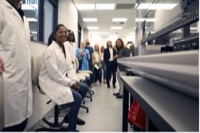
SWEAT Africa connects deep-tech founders, corporates, and investors to turn Africa’s scientific innovation into scalable, real-world solutions through collaboration, capital, and market access.
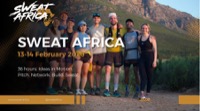
SWEAT Africa rewards active participation — blending physical energy with strategic networking to spark real partnerships and momentum.

Stellenbosch and Franschhoek combine Africa’s innovation ecosystem with wine, culture, and nature — creating the perfect setting to explore, connect, and build during SWEAT Africa.

SWEAT Africa empowers founders with community, mentorship, and practical skills to build scalable companies from Africa for the world.
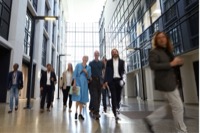
SWEAT Africa is backed by leading development banks, venture funds, corporations, and foundations working together to empower African founders and scale scientific innovation.

SWEAT Africa is an action-oriented platform uniting Africa’s startup ecosystem to collaborate, build trust, and turn ideas into impact.
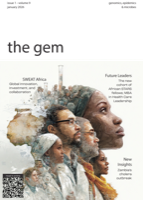
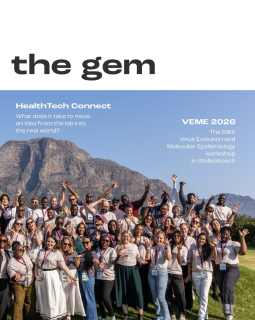
The first 2026 edition of the gem kicks off with unstoppable energy, literally. What began as a simple idea has quickly transformed into something bold and exciting: SWEAT Africa. This edition of the gem also proudly introduces the new cohort of African STARS Fellows. the gem continues to spotlight vital scientific work, with new insights into bioinformatics, genomics and climate change

Stellenbosch is more than a picturesque town; it’s a science and innovation hub. Home to Stellenbosch University and the Technopark innovation hub, the town is rich with researchers, engineers, and entrepreneurs shaping Africa’s tech future.
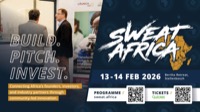
This brand new venture festival is positioning our continent at the centre of global innovation, investment and collaboration.
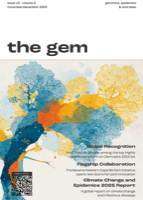
As 2025 draws to a close, the Centre for Epidemic Response and Innovation (CERI), the KZN Research Innovation and Sequencing Platform (KRISP) and SACEMA reflect on a year marked by scientific excellence, global collaboration, and meaningful advances into the future of AI-driven health innovation. This edition of the gem magazine captures highlights of that journey.
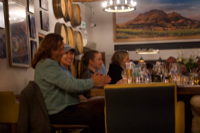
Sweat Africa: Inspiring young people to pursue careers in tech and entrepreneurship. We are on a mission to help and create founders to change the world from Africa.
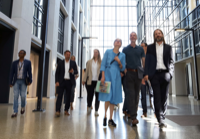
As part of their visit to the Stellenbosch University, the universities in the Bavarian delegation toured CERI’s state-of-the-art facilities at the Tygerberg Campus on 4 November. Accompanied by Prof Tulio de Oliveira and senior researchers, the group explored how CERI is driving innovation in genomic surveillance and building scientific partnerships across Africa
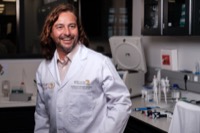
For the second year in a row, the Director of the Centre for Epidemic Response and Innovation (CERI) at Stellenbosch University (SU), Prof Tulio de Oliveira, has secured a spot on the prestigious Clarivate Highly Cited Researchers list for 2025, specifically in the Cross-Field category

The Centre for Epidemic Response and Innovation (CERI) demonstrates its commitment to environmentally responsible research, joining a growing network of sustainable laboratories globally
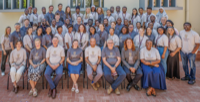
The School for Data Science and Computational Thinking at Stellenbosch University (SU) hosted its 2025 Research Days on 13 and 14 November, bringing together students, researchers, and partners to showcase cutting-edge work addressing Africa’s most urgent challenges – from AI and data infrastructure to women’s health, climate change, infectious disease surveillance, and mental health
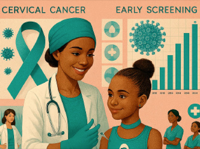
South Africa continues to face one of the world’s highest burdens of cervical cancer, a disease that disproportionately affects women living with HIV. New modelling work by SACEMA’s Senior Researcher, Dr Cari van Schalkwyk, explores how current HPV vaccination strategies could reshape the country’s path toward cervical cancer elimination
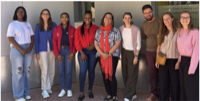
In late October, the Centre for Epidemic Response and Innovation (CERI) at Stellenbosch University welcomed two internationally recognised computational scientists – Dr Joseph Elsherbini of Massachusetts Institute of Technology (MIT)’s Ragon Institute and Dr Laura Symul, assistant professor of biostatistics at UC Louvain
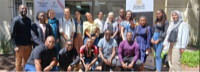
In the past, researchers and scientists could comfortably work in their own silos without needing to interact outside of their boundaries. Today, however, global challenges have become increasingly complex and the call for scholars to work collaboratively across disciplines and beyond academia has never been louder.
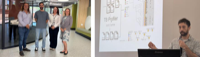
From 24 to 28 November 2025, the Centre for Epidemic Response & Innovation (CERI) and the Tuberculosis Genomics Group (TBG) had the pleasure of hosting Dr Jody Phelan, an Assistant Professor from the London School of Hygiene & Tropical Medicine (LSHTM).
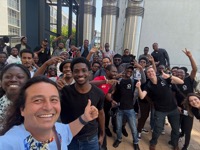
The new cohort of students from the African Institute for Mathematical Sciences (AIMS) and Google DeepMind Fellows visited the Centre for Epidemic Response and Innovation (CERI) at the Biomedical Research Institute (BMRI) on Stellenbosch University’s Tygerberg Campus on 28 November.
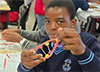
As part of its commitment to strengthening STEM education and scientific capacity in South Africa, KRISP recently welcomed 30 Grade 9 learners from the Umlazi and Chesterville branches of IkamvaYouth for an immersive outreach day at its laboratories. This initiative is part of KRISP’s broader efforts to spark early interest in genomics, biotechnology, and life sciences among curious young learners.
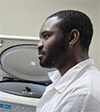
Avisiting HIV Research Trust Fellow from Cameroon, Dr Armando Djiyou, joined KRISP for a month-long training and knowledge exchange programme. Based at the University of Yaoundé I, Dr Djiyou wished to deepen his expertise in genomics and clinical research methods.

A high-level Bavarian delegation visited Stellenbosch University and CERI to tour world-class genomic infrastructure and strengthen a new international partnership in biotechnology and scientific innovation. The visit highlights a shared commitment to collaborative research, capacity building, and scalable technological advancement across Africa and Bavaria.

This keynote connects ancient disease landscapes with modern spillover surveillance through metagenomics and One Health approaches. Participants will gain insights into environmental sampling at high-risk interfaces and the genomic reconstruction of Africa’s ancient pathogens.

From mosquitoes carrying dengue and chikungunya in Indian Ocean islands to West Nile virus now endemic in parts of Europe, climate change is redrawing the global map of infectious disease.
MOST POPULAR
BLOG

KRISP has been created by the coordinated effort of the University of KwaZulu-Natal (UKZN), the Technology Innovation Agency (TIA) and the South African Medical Research Countil (SAMRC).


Location: K-RITH Tower Building
Nelson R Mandela School of Medicine, UKZN
719 Umbilo Road, Durban, South Africa.
Director: Prof. Tulio de Oliveira