
Building and Funding Globally Competitive African Ventures
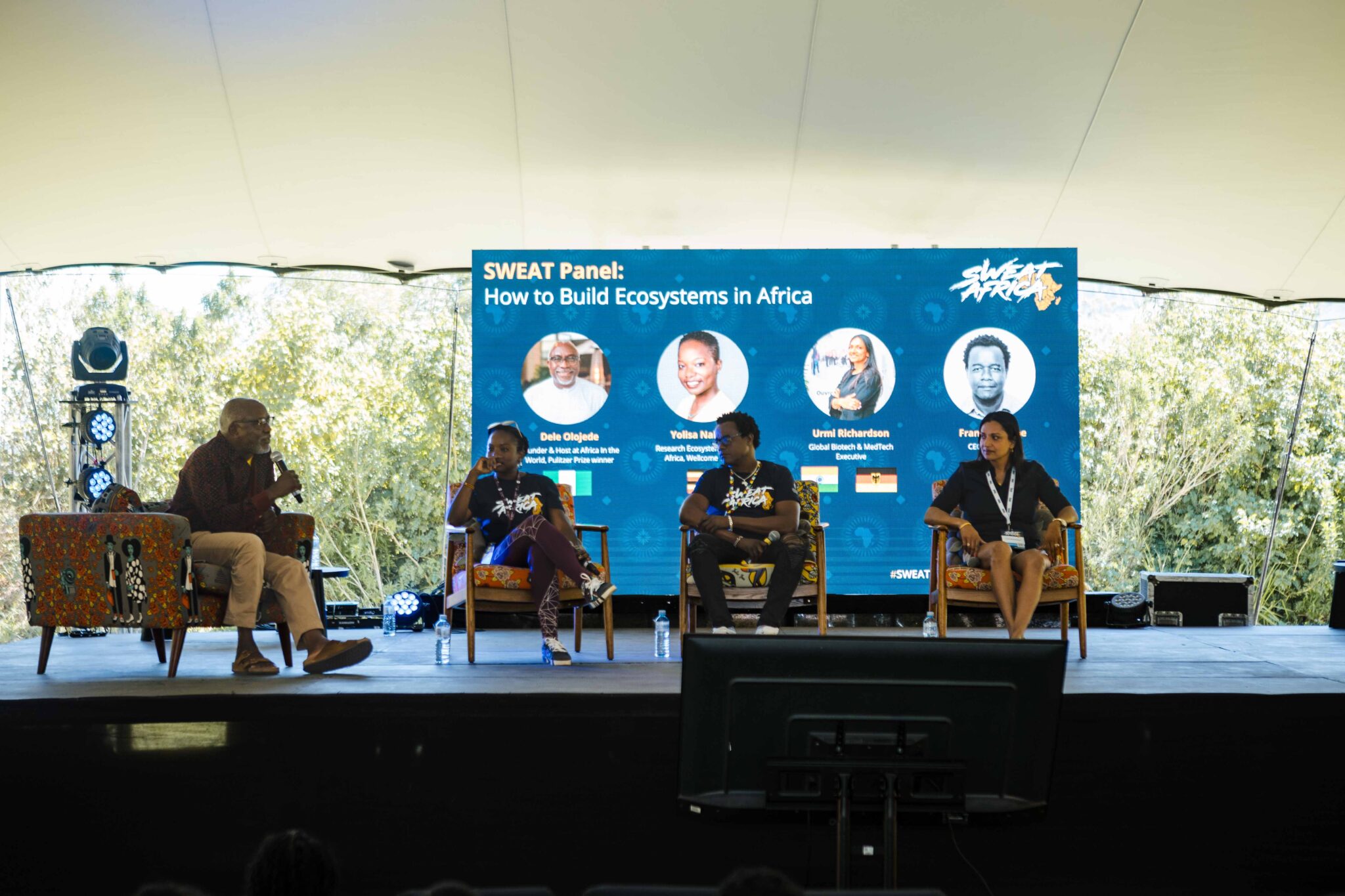
On 14 February 2026, Day 2 of SWEAT Africas debut festival, an inspiring panel turned the spotlight on a question central to innovation: what does it actually take to build ventures that endure. True to SWEATs outdoor, movement-driven format where dialogue continues between walks, runs and yoga the discussion carried that same forward energy into a focused, practical exploration of systems, funding alignment and real-world impact.
Led by Pulitzer Prize-winning journalist and Africa In the World founder Dele Olojede, the session brought together leaders from philanthropy, global life sciences, and research ethics to unpack how Africa can build, scale and sustain globally competitive science- and technology-driven ventures.
With candour and humour, Olojede pushed the conversation beyond funding mechanics into deeper questions of impact, implementation, systems failure, storytelling, and Africas position in the global innovation economy.
Joining him were Urmi Richardson, a global life sciences executive with over 25 years experience scaling healthcare businesses worldwide; Yolisa Nalule, who leads Wellcomes Major International Programmes in Africa; and Francis Kombe, CEO of EthIXPERT, a pan-African non-profit advancing research ethics and responsible conduct.
From Lab to Responsible Impact
Francis Kombe grounded the discussion in the realities of translating scientific ideas into real-world solutions.
When a researcher conceptualises an idea, he explained, they must consider the full pathway from laboratory testing to animal studies to human trials each governed by strict ethical guidelines and review processes. Ethical oversight is not bureaucracy, he argued, but the foundation of trust, safety and sustainability.
EthIXPERT strengthens research capacity and responsible conduct across the continent and has developed an AI model to support ethics review workflows, helping streamline what can otherwise be a lengthy process.
Kombe also raised a structural concern: Africas young, brilliant scientists often struggle to secure funding for innovations designed to serve their own communities. Governments, he argued, should be doing more to support locally relevant innovation that benefits their people a message closely aligned with SWEAT Africas mission.
How Philanthropic Funding Works
Yolisa Nalule offered insight into how global philanthropic capital operates.
Wellcome, a UK-based philanthropic organisation, is deploying $16 billion over ten years to support science addressing infectious disease, climate and health, mental health, and discovery-driven research. We are the nerds behind the nerds, she said funding the science that enables products and solutions.
Unlike venture capital, Wellcome does not seek financial returns but long-term health impact. Funding must align with strategic priorities and demonstrate improved health outcomes, particularly for African communities. Although funding decisions are based in London, Nalule stressed that African researchers lead the work, with partnerships across the continent ensuring impact is defined locally not imposed externally.
What Ventures Must Articulate
From the private-sector perspective, Urmi Richardson examined why promising ventures fail to secure funding a critical issue at a festival convening founders and investors from across Africa.
Founders usually understand what they are building, she said. The challenge is explaining why it matters. To attract funding, ventures must demonstrate:
- An unmet need.
- A clear competitive advantage.
- Seamless integration into existing workflows making processes easier, cheaper, faster, or more effective.
- Two common barriers are: misalignment with a funders time horizon and risk appetite, and failure to communicate value clearly. You need to talk about the impact, the outcome, the why, Richardson emphasised. Why invest now not later?
She also underscored the need for translation. Scientists and technologists often require mentors or ecosystem builders who can bridge innovation and capital. You need other people, she said people who can articulate value in investors language.
That insight resonated strongly with the audience. Reflecting on the panel, MSc candidate and Phaphama SEDI President, Kondwani Jalasi Ngulube, said that most people fail to get a second meeting because they focus too much on what they are doing and not why it matters. Mastering value articulation, he noted, is essential: If you cant relate your work back to a tangible impact, its nearly impossible to build a lasting ecosystem or partnership.
He also echoed Richardsons call for operational discipline, stressing the need for honesty about where time and money go and clarity on who delivers results. Ultimately, he captured the panels central theme: Impact is really just a direct translation of your why into results.
The Implementation Gap
Olejede broadened the discussion by questioning why scientific breakthroughs do not always reach African populations. Referencing highly effective malaria vaccine research, he asked: if the science exists, why is it not in the hands of those who need it most?
The panel agreed that failure is rarely about the product alone. During COVID-19, vaccines were developed rapidly a triumph of science yet distribution systems in many African countries were under-resourced. Shortages of nurses and doctors, weak delivery mechanisms and limited coordination hindered rollout. In some cases, vaccines sat unused elsewhere while local access gaps persisted.
The lesson was clear: innovation requires functioning systems. Products alone are not enough.
Many endemic diseases remain underfunded because they are not seen as commercially profitable. To unlock partnerships, innovators must articulate measurable impact and shared value in terms funders and policymakers recognise.
The Language Problem
A recurring theme was language. Olejede highlighted the persistent gap between the language of investors and scientists. Without translation, alignment breaks down.
Kombe added that researchers are often not effective communicators to the broader public, contributing to limited awareness of sciences importance. Allocating even a small portion of research budgets to marketing and awareness could shift perceptions significantly.
Richardson reinforced this in the context of climate change: technical detail matters, but decision-makers and communities need clarity. What does this mean for your life? Your children? Your community?
If founders cannot tell that story themselves, Olejede suggested, they should find partners who can.
A Shared Conclusion
Across philanthropy, venture funding, journalism and ethics oversight, the panel converged on one insight: Africa does not lack talent or ideas. The challenge lies in alignment between research and implementation, innovation and infrastructure, funders and founders, governments and ecosystems. It lies in ethical foundations, operational discipline, strong systems and the ability to articulate impact convincingly.
The SWEAT panel distilled one of the festivals defining messages: building globally competitive African ventures is not only about capital. It is about coordination, communication, trust and ensuring scientific breakthroughs translate into real-world outcomes for the continent.
As SWEAT participant Ngulube reflected, SWEAT Africa required both critical thinking and lit
News date: 2026-02-21
Links:
https://sweat.africa/sweat-panel-building-and-funding-globally-competitive-african-ventures/
KRISP has been created by the coordinated effort of the University of KwaZulu-Natal (UKZN), the Technology Innovation Agency (TIA) and the South African Medical Research Countil (SAMRC).


Location: K-RITH Tower Building
Nelson R Mandela School of Medicine, UKZN
719 Umbilo Road, Durban, South Africa.
Director: Prof. Tulio de Oliveira