


NEWS

As the nation debates about whether lockdown restrictions must be eased, Professor Tulio de Oliveira argues that its value cannot be underestimated.

Government interventions, including the travel ban and lockdown, have potentially averted at least 20 000 deaths, says a top scientist

UKZN's Professor Tulio de Oliveira is a bioinformatician from the KwaZulu-Natal's Research, Innovation and Sequencing Platform (KRISP) faculty - and he spoke to us this morning.

In our April/May issue of 2020, We have worked very hard to produce and analyse COVID-19 data in real time. We have also sequenced many SARS-CoV-2 genomes in South Africa that showed how the virus was introduced in the country. We also worked with the media to help to translate scientific results to the general public. KRISP believes that open and independent scientific information is represented by good journalism that determines its value to the society it serves.
KwaZulu Natal's Research, Innovation and Sequencing Platform (KRISP) and the Big Data Flagship Program of the University of KwaZulu-Natal (UKZN) has a multi-disciplinary team of world-renowned experts which mainly focuses on analysis and control of viral outbreaks and genomic analysis.

Cape Town - Confirmed Covid-19 infections in South Africa have risen to 5 951, with 13 deaths recorded in the past 24 hours, Health Minister Zweli Mkhize announced on Friday. This is an increase of 304 confirmed cases on Thursday's figures.
The Covid-19 infection rate could jump from 5% to 10% per day as South Africa emerges from a five-week hard lockdown from Friday. Scientists are expecting a "rapid rise" in infections ahead of the disease hitting its peak in summer.
As South Africa edges towards the end of the so-called hard lockdown, and with an expected spike in Covid-19 cases around the corner, just 27 Covid-19 patients are on ventilator support in hospital, seemingly in line with government's projections. Sarah Evans from News24 highlights our Big Data COVID-19 analysis of in South Africa.
Many deaths are still likely to hapen because of the coronavirus, but a promising vaccine against Covid-19, developed by the University of Oxford, started human trials this week. UKZN scientists warn many deaths still likely before virus is conquered

Scientific research on Covid-19 has been published at an unprecedented scale and speed, but some fear that this is at the cost of scientific rigour. Adele Baleta explores the pros and cons of high-speed science. By Adele Baleta for Spotlight, Daily Maverick and News24, 24 April 2020

The use of data science has become a critical 'gold rush' as research scientists across the globe partner on scientific breakthroughs, to better understand the novel coronavirus (COVID-19) and recommend strategies to help address its complexities
Durban - A team of world renowned scientists based at the University of KwaZulu-Natal has launched a fundraising campaign to support the analysis of Covid-19 data - which could provide vital research and insight on the spread of the virus across both South Africa and globally as the world battles to contain the devastating pandemic.

They have produced five of the six COVID-19 viral genomes in the country, which clearly showed how the virus was introduced into South Africa. KwaZulu Natal's Research, Innovation and Sequencing Platform (KRISP) and the Big Data Flagship Programme of UKZN collaborate in a fund raising campaign.

Scientists at the University of KwaZulu-Natal (UKZN) have launched a fundraising campaign to finance independent research into the Covid-19 outbreak in South Africa. Donors will qualify for Section 18A tax certificates, issued by the UKZN Foundation.

The countries which have had some of the best responses to the COVID-19 pandemic, Singapore and South Korea, have closely followed scientific advice. Our government has already used our results to show that South Africa is flattening the curve. We need your support to ensure that we can keep producing high-level scientific information to guide our national response.

KRISP has partnered with the Pro-Vice Chancellor of Big Data Analysis at UKZN, Prof. Francesco Petruccione to put together a team with more than 20 researchers, including computer scientists, mathematicians, statisticians, bioinformaticians, infectious diseases clinicians, theoretical physicists and quantum computing scientists to analyze the COVID-19 outbreak in South Africa.

Watch the full videos of the Big Data, Genomics and Clinical Medicine presentations of COVID-19 by experts. Full videos of Prof. Salim Abdool Karim, Prof. Tulio de Oliveira and Dr. Richard Lessells in April 2020. Data@breakfast organised by Prof. Francesco Petruccione of UKZN Big Data Flagship program.
The extended five-week national lockdown has postponed South Africa's worst-case Covid-19 scenario to September, a government projection shows. March was arguably the busiest month for President Cyril Ramaphosa in his tenure as head of state. Every other day, the President is putting out fires.

A UKZN seminar series has been moved online in the face of the COVID-19 epidemic. IT was a logical step for UKZN Pro Vice-Chancellor for Big Data and Informatics, Professor Francesco Petruccione, to turn to the online world to continue with his monthly data@breakfast seminar series in a time of national Covid-19 lockdown.

Lessons learned in Eshowe, South Africa, one of the areas worst hit by the HIV pandemic, are being used against coronavirus. Jason Burke in Eshowe writes to The Guardian about KRISP and UKZN work.
Durban - Conflicting information and misinformation about whether to wear a mask or not during the Covid-19 pandemic has left many people confused.The World Health Organisation (WHO) has recommended people not wear a mask unless they are sick with Covid-19 or caring for someone who has the virus.

Durban - ONLY polymerase chain reaction (PCR) tests are being used to test for the coronavirus in South Africa, which can detect infection before patients become symptomatic, and not rapid serological tests, which are not recommended by experts for public use.

A young single mother has started her own business making masks, which she distributes in rural areas. Currently there's a huge debate on the subject of a face mask's efficiency, with the World Health Organisation saying there is no evidence to suggest it curbs the spread. However, some experts believe it does indeed work, as studies into other coronaviruses proved masks can reduce the risk.

Speaking to the media on Wednesday night, Health Minister Zweli Mkhize said, We will only fight coronavirus with facts and evidence-based strategies, not fake news. Mail and Guardian news, 2 April, 2020.

South Africa stands at a crossroads in the fight against the new coronavirus — and winning the battle will hinge on the decisions we make now about how quickly and how broadly we begin to test for the virus. In a grim news cycle, Health Minister Zweli Mkhize's announcement yesterday that the country is evaluating rapid tests for the new coronavirus is something to celebrate. Bhekisisa opinion piece by Dr. Richard Lessells and Prof. Mosa Moshabela.
Durban - An infectious disease specialist says that although the world is much more prepared to deal with a pandemic than in previous years, African countries are still unable able to respond adequately to a respiratory virus like Covid-19.
South Africa's strategy to defeat Covid-19 is to lock down the country and scale-up testing to quickly identify people who may have been infected with the SARS-CoV-2 virus. Health journalism by Adele Baleta for Spotlight 31 March 2020.

Südafrika hat die meisten Corona-Fälle in Afrika. Auch wenn die Zahlen denen in Europa noch hinterherhängen, warnen Experten vor einer rasanten Ausbreitung des Virus. Von Julia Jaki, Kapstadt, 27. März 2020
There is much we do not understand about the virus and how it will affect our bodies, especially after Minister of Health Zweli Mkhize said that 60% to 70 % of people could be infected by Covid-19. The Mail & Guardian asked different experts — including disease specialist Dr Richard Lessells, the National Institute for Communicable Diseases, and the World Health Organisation (WHO) — for information about this coronavirus.
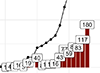
Together with the Big Data group of UKZN, we started a daily update of the data on COVID-19 in South Africa and a weekly update on cases, deaths and genomic data in Africa. All of the scripts for generation of the data is deposited open in repositories as all any data developed by our team.
MOST POPULAR
BLOG

KRISP has been created by the coordinated effort of the University of KwaZulu-Natal (UKZN), the Technology Innovation Agency (TIA) and the South African Medical Research Countil (SAMRC).


Location: K-RITH Tower Building
Nelson R Mandela School of Medicine, UKZN
719 Umbilo Road, Durban, South Africa.
Director: Prof. Tulio de Oliveira