


NEWS

Three thousand people have died in Italy as a result of Covid-19, with more than 35000 infected. Three weeks ago, the country passed the 150 mark for infected people. It took three weeks to get to that number. In South Africa, we passed the 150 mark on Thursday, two weeks after the first local positive test. Mail and Guardian, 19 March 2020.
The University of KwaZulu Natal's Research Innovation and Sequencing Platform (KRISP) boasts state-of-the-art laboratory facilities and scientific expertise and capacity not commonly found in Africa. This places our multidisciplinary team in the ideal position of being able to play a critical role in supporting the public health response to the COVID-19 pandemic. The team has placed all current research activities and services on hold to focus full-time on helping with this outbreak. Please help to fund it by donating to our activities here.

The National Institute for Communicable Diseases can run hundreds of tests at the same time but ultimately the number of tests South Africa will be able to carry out for the new coronavirus depends on the machines, people and testing supplies available.

To bolster these efforts, the university has created an email address: covid19@ukzn.ac.za and the hashtag: #ukzncovid19 that staff and students can make enquiries to. The university is in the process of creating a hotline, which will aid in communicating with its stakeholders about the virus.
KRISP flew two international specialists from Thermo Fisher Scientific to start our new CRISPR-Cas9 laboratory! We also received advanced training on genetic and epigenetic editing techniques in our own lab. KRISP has now all of the equipment to growth, edit and analyse cell lines. The lab is available for scientific service and it is a major development that will help to keep Africa at the cutting-edge of science.

KRISP has an exhibition space at the Innovation Festival, Durban, 5-7 march 2020. We will also be participating in the Cities of the Future discussion session, where we will present BioDurban vision to make Durban the Biotech capital of Africa. Please come visit us and learn more about Biotech, Innovation, Genomics, Epigenetics, Bioinformatics, Precision Medicine and DNA testing...

We developed an rapid bioinformatics tool for the identification and characterization of novel coronavirus genomes. The tool was released in January 2020 and published in Bioinformatics in February 2020 as an open access tool to help to characterise genomes of COVID-19 viruses.

In our February/March issue of 2020, we highlight our work on the current coronavirus outbreak. We published a software application for rapid identification and characterization of novel coronavirus genomes. Our quick response was lauded by the national and international media. In this issue, we also cover the award from UKZN vice-chancellor to Dr. Veron Ramsuran, launched a CRISPR-Cas9 laboratory and organized talks, exhibitions and training workshops.

Inkosi Albert Luthuli Central Hospital (IALCH), KRISP and Genetic Alliance SA joins nearly 200 national and global organizations in observing the sixth annual World Birth Defects Day (WBBD) on March 3, 2020. Launched in 2015, the WBBD movement aims to raise awareness around the serious global issue of birth defects and to urge improved surveillance, research, prevention, and care for affected individuals and families.
Learn UNIX/Linux from our experienced KRISP bioinformaticians. This 2-day course will teach you the basic UNIX/Linux commands that you will need to manage data. This is the first of five bioinformatics courses that KRISP is presenting in 2020.

KRISP was in the front and second page of Saturday Independent newspaper, including an article on how a reporter from nature has followed our hard work to produce and release the Genome Detective Coronavirus Tool in January 2020.

High-impact researchers at the KwaZulu-Natal Research Innovation and Sequencing Platform (KRISP), based at the University of KwaZulu-Natal (UKZN), Dr Veron Ramsuran and honorary senior lecturer, Dr Lenine Liebenberg, have been selected as African Academy of Sciences (AAS) Fellows.

Durban - University of KwaZulu-Natal's (UKZN's) high impact researcher, Dr Veron Ramsuran, was awarded the prestigious UKZN Vice-Chancellor's annual award. This award is the most prestigious award given at UKZN.

As news of the deadly Coronavirus spreads across the globe, a Durban man, teaching English in Hangzhou, describes the eerie streets of a city on lockdown and researchers at the University of KwaZulu-Natal (UKZN) prepare for the potential of a Coronavirus outbreak in Durban.

The huge amount of knowledge gathered in six short weeks on the coronavirus outbreak (Covid19 or SarsCoV2) was a first for the global scientific community. That was the opinion of University of KwaZulu-Natal Professor Tulio De Oliveira from the KZN Research Innovation and Sequencing Platform (KRISP) at a public talk attended by 120 people at the Nelson Mandela Medical School, 15 feb 2020.
KRISP Talks by Prof. Tulio de Oliveira (KRISP UKZN & CAPRISA), Novel Coronavirus (2019-nCoV) Outbreak: Genomics & Epidemiology. This page summaries resources for coronavirus COVID-19 in KZN and South Africa and internationally. It also present our work on the creation of a genomics and bioinformatics pipeline for fast and accurate analysis of coronavirus genomes. KRISP is bases at K-RITH building, Nelson R Mandela School of Medicine, UKZN, Durban, South Africa.
This month, we launch our bioinformatics training program for 2020 and highlight as one of our key researchers become affiliate to the African Academy of Science. We also join the international community to fight the new coronavirus (2019-nCoV) pandemic, published a key paper on understanding HIV transmission hotspots and renewed our partnership with Thermo Fisher Scientific to provide very affordable sequencing in Africa

KRISP expanded its genomics service offers. Our DNA sequencing services incorporate internal quality control (IQC), external quality assurance (EQA) and procedures are validated and performed by HPCSA-accredited scientists. Here you can access a detailed brochure of the genomics services we provide in Africa.

KRISP at UKZN partner with Stanford University on a global innovation program: SPARK GLOBAL: Translational Scientists without borders. As part of this program we run a monthly meeting (first Wednesday of EVERY MONTH) to discuss innovation, select and mentor start-ups that can produce translational research.
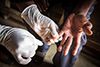
New research from the Africa Health Research Institute (AHRI) in collaboration with KRISP shows a 43% decrease in the rate of new HIV infections between 2012 and 2017 in the Hlabisa area of northern KwaZulu-Natal (KZN), South Africa.

Lifeblood, an exhibition of photographs by Mr Samora Chapman at the Community Art Gallery in Durban. Curated by UKZN Professor and Director of the KwaZulu-Natal Research Innovation and Sequencing Platform (KRISP) Tulio de Oliveira, it aimed to highlight the diversity of humans, plants and animals in South Africa.
This month, we report on a Nature Communications paper with AHRI that report a 43% decline in the overall HIV incidence rate in northern KZN. We also hosted a leading conservation genomics scientist and organized many talks and events. We went to Drakensberg for our strategic meeting, released the KRISP Wellness program and even went to Hamburg, Germany, to compete in the finals of the Upgrade my NGS Competition.
This month, we focus on a key Nature Communications paper that report a 43% decline in the overall HIV incidence rate in northern KZN. We also hosted a leading conservation genomics scientist and organized many talks and events. We went to Drakensberg for our strategic meeting, released the KRISP Wellness program and even went to Hamburg, Germany, to compete in the finals of the Upgrade my NGS Competition.
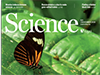
Prof. Frandsen, who published a paper in Science on conservation genomics in Nov 2019, has worked with KRISP & Genomics Africa to identify DNA sequencing services that we offer the conservation community in Africa.

In today's world, health and wellness are critical components of a productive work environment and a happy workforce. To often, these topics are misunderstood or ignored in an organisation's drive for results and profit. Health and wellness can also not be viewed in isolation of each other, as each feeds into and supports the other. Health is a state of body, and wellness is a state of being

At the end of November, the KRISP team traded their lab coats and laptops for hiking boots and hats, as they travelled up to the Sani Pass Premier Resort for a three-day strategy session

UKZN African Health Flagship Talks by Dr. Richard Lessells (KRISP UKZN & CAPRISA), Can we stop worrying about HIV drug resistance with the roll-out of dolutegravir? Tuesday, 26 Nov 2019 (12:00pm - 1:00pm), K-RITH building, Nelson R Mandela School of Medicine, UKZN, Durban, South Africa. All welcome!

KRISP at UKZN challenges the status quo to create a scientific environment in South Africa that delivers high level science, creates innovations and reverses the brain drain. This vision is starting to pay off, and we are happy to say that in just three years, we published > 15 papers in Nature, Science and Lancet journals, which are some of the most respected scientific journals in the word.

UKZN African Health Flagship and KRISP Talks by Dr. Benjamin Chimukangara (Phd Graduation Talk, Post-Fellow at KRISP, UKZN) - Increasing levels of HIV pretreatment drug resistance in South Africa. Tuesday, 19 Nov 2019 (11:00am - 12:00), K-RITH building, Nelson R Mandela School of Medicine, UKZN, Durban, South Africa. All welcome!

KRISP is running a Sanger Sequencing promotion to celebrate the launch of two new Sanger Sequencers (ABI 3730xl and 3500). Unbelievable prices for 2020. Capillary electrophoresis only – R 25 (per sample well). Sequencing of PCR purified amplicons – R 45 (per primer). Sequencing of PCR unpurified amplicons – R 75 (per primer).
MOST POPULAR
BLOG

KRISP has been created by the coordinated effort of the University of KwaZulu-Natal (UKZN), the Technology Innovation Agency (TIA) and the South African Medical Research Countil (SAMRC).


Location: K-RITH Tower Building
Nelson R Mandela School of Medicine, UKZN
719 Umbilo Road, Durban, South Africa.
Director: Prof. Tulio de Oliveira