
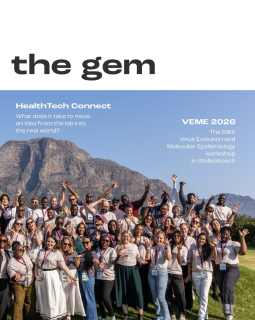


NEWS
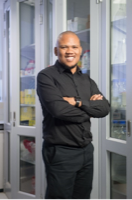
Prof. Thulani Makhalanyane, a microbiome researcher at Stellenbosch University, has been awarded the SASBMB Silver Medal for his national and international research excellence. Recognized for his active participation in the South African Society of Biochemistry and Molecular Biology, Prof. Makhalanyane advocates for equitable research partnerships in African microbiome studies.
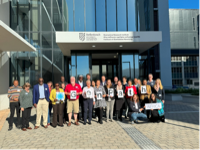
The GenPath Africa Annual Meeting at Stellenbosch University gathered leading scientists to discuss advancements in pathogen genomics for disease surveillance and outbreak management. Key topics included genomic sequencing of pathogens, drug-resistant TB, and wastewater-based surveillance. The event emphasized collaboration, ethical standards, and the development of a 10-year Integrated Pathogen Genomics Strategic Plan for Mozambique.
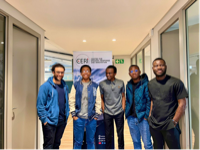
Five students from AIMS, now at CERI, are leveraging AI to tackle global health challenges. Projects include studying arbovirus transmission, enhancing digital disease surveillance, predicting dengue incidence, assessing climate disaster impacts, and detecting SARS-CoV-2 variants. Their innovative work, supervised by experts, aims to advance public health and resilience.

A new framework in Nature Medicine advocates for more equitable microbiome research collaborations, emphasizing the need for African scientists to lead studies. This approach aims to enhance the role of African researchers and ensure fair partnerships with international collaborators.
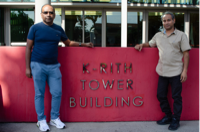
Mauritian virologists Mr. Ubheeram Jaykissen and Mr. Lallmahamood Shad completed a two-week training at KRISP in Durban to advance HIV drug resistance testing. This collaboration aims to enhance the Mauritian government's ability to monitor and combat HIV/AIDS with cutting-edge methodologies.
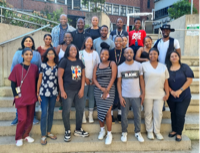
From June 7-10, KRISP at the University of KwaZulu-Natal held a successful Illumina training workshop, bringing together researchers and students to learn about cutting-edge sequencing technology. The event, supported by DIPLOMICS and SEPARATIONS, featured hands-on training and comprehensive sessions, enhancing participants' practical skills and confidence in genomics.
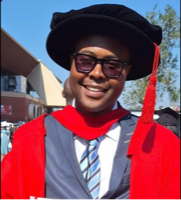
Dr. Farirai Mutenherwa celebrates completing his PhD at the University of Kwazulu-Natal, emphasizing the importance of well-being alongside academic success. His research on ethical issues in HIV phylogenetic analysis highlights the need for privacy, informed consent, and ethical frameworks. He encourages PhD students to maintain a balanced lifestyle and a strong support system for success.
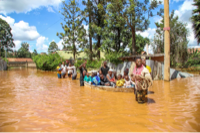
Since late 2021, extreme weather events in Southern and East Africa have triggered severe cholera outbreaks, resulting in over 6,000 deaths and nearly 350,000 cases. Countries like Malawi, Zambia, Zimbabwe, Mozambique, Kenya, Ethiopia, and Somalia face unprecedented surges as storms, floods, and drought exacerbate the crisis.
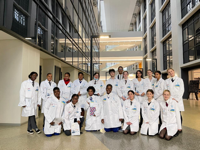
Inspiring South Africa's future scientists: The 2024 Gen S Campaign, led by SAMRC, Stellenbosch University, and CERI, offers high school students hands-on STEM experiences during Youth Month. This immersive program aims to address the country's critical skills shortage and ignite a passion for science in the next generation.
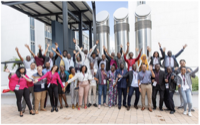
Last month, we announced 15 fellowships in genomics and bioinformatics, receiving over 2000 applications in just three weeks. This overwhelming response highlights a significant gap between the demand for training and available opportunities. We appreciate all applicants and emphasize the need for collaborative efforts to expand training programs in these critical fields.

We're committed to providing affordable genomics sequencing in Africa, with no profit motive. We aim to unleash genomics' potential, support scientific research, and foster biotech, vaccine, therapy, and diagnostics development in Africa.

The Centre for Epidemic Response and Innovation (CERI), based at Stellenbosch University, and the KwaZulu Research and Innovation Sequencing Platform, based at the University of KwaZulu-Natal in South Africa, are offering 15 short-term fellowships for training in genomics and bioinformatics. The 2-week fellowship will cover travel, accommodation, meals, and ground transfers in South Africa.

CERI team is invited to present the impact of CLIMADE consortium at five main events in the USA in June-July 2024. These include keynote presentations at CREID, American Society of Virology, Wisconsin-Madison special lecture, EEID conference in Stanford University and invited visits and lectures at the BROAD and RAGON institutes of the MGH, MIT and Harvard.
A team of four members from CERI and CLIMADE program are in Stanford University to present multiple results at the 2024 Ecology and Evolution of Infectious Diseases (EEID) Conference and to engage and develop collaboration with global colleagues on ecology, modelling and evolution of Infectious Diseases

Seven cases of “severe Mpox” have been confirmed in South Africa, and two of those diagnosed have since died. All cases involve men in their thirties living with co-morbidities – most notably HIV. Five of the seven identified as “men who have sex with men,” according to the South African Department of Health.

The Department of Health has urged the public to avoid physical contact with individuals who have contracted Mpox. South Africa has so far recorded a total of seven laboratory-confirmed cases and two deaths. Professor Tulio de Oliveira, Director of CERI: SU and Director of KRISP at UKZN unpacks the nature of the disease and preventative measures

Health minister has confirmed two deaths from the disease. Experts have stressed the importance of increased awareness about Mpox as they warned South Africa is likely to see more cases in what appears to be the worst outbreak of the disease to date.

Prof. Tulio De Oliveira talks to Stephen Grootes about the outbreak of Mpox in South Africa following the Health Department's concession regarding the outbreak and confirmation of one death.

Imagine this: "Be visible. Be very visible or I'll simply forget about you. I have too many to supervise", said your new supervisor

Welcome to the 2st CERI/KRISP newsletter of 2024. This month, we are thrilled to celebrate Professor Tulio de Oliveira, The Director, for his second recognition by TIME as one of the TIME100 Health 2024's most influential individuals globally.
From April 15th to 17th, 2024, an insightful workshop took place at the KEMRI-Wellcome Trust Research Programme in Kilifi, Kenya, bringing together global health and genomic data experts. This event, in collaboration with Oxford University, aimed at advancing the federated analysis of genomic data for public health, particularly focusing on enhancing rapid data sharing and analysis capabilities during the initial stages of outbreaks and epidemics.

TIME Magazine has recognized Prof Tulio de Oliveira in its inaugural 2024 TIME100 Health list, a new annual compilation that celebrates 100 individuals who have had the most impact on global health this year.
Issued by Stellenbosch University, May 2, 2024. Liaise with Maambele Khosa at maambele@sun.ac.za or +27 79 592 9174 for more information or to schedule interviews.
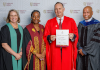
On April 23, 2024, Prof. Frank Tanser, the Director of Population Health Innovation at Stellenbosch University's Centre for Epidemic Response and Innovation, delivered an insightful inaugural lecture titled "The rise (and fall?) of South Africa's HIV epidemic: a personal perspective." His talk provided a deep dive into the past, present, and future of HIV epidemic management in South Africa, underlining both the achievements and ongoing challenges.
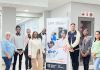
In line with the Centre for Epidemic Response and Innovation (CERI)’s commitment to provide high quality genomics services, the laboratory is gearing up to achieve ISO/IEC17025 accreditation – an internationally recognized Standard for testing laboratories. This prestigious accreditation is internationally recognized and is key to laboratories aiming to demonstrate their operational competence and ability to produce valid and high-quality results.
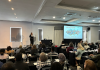
The Virology Africa 2024 conference, held from April 15-18 at the Protea Hotel in Techno Park, Stellenbosch, brought together a vibrant community of virologists from across Africa and beyond. Key themes of the conference included One Health, the management of emerging viruses, pandemic preparedness, and advances in vaccinology among others.
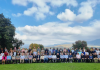
In a concerted effort to bolster the global fight against HIV/AIDS, leading experts from a host of prestigious institutions convened at the recent HIV Prevention Workshop that took place from 24-26 April 2024 near the Drakensberg, South Africa. The collaboration between the Ragon Institutes of Massachusetts General Hospital, Harvard, and MIT with Durban-based organizations such as the Centre for the AIDS Programme of Research in South Africa (CAPRISA), African Health Research Institute (AHRI), HIV Pathogenesis Programme (HPP), and the University of KwaZulu-Natal (UKZN), underscored the importance of international cooperation in tackling this pressing public health challenge.

The United World Antiviral Research Network (UWARN) recently held its annual meeting from April 22-24, in Kaohsiung City, southern Taiwan, bringing together key partners from the University of Washington, Senegal, South Africa, Switzerland, Pakistan, and Taiwan. The primary focus was on fostering collaboration and exchanging updates on ongoing research. Participants shared their latest findings, discussed the challenges faced, and highlighted their successes, reinforcing the network’s commitment to advancing the global response to infectious diseases.

The continent – in dire need of its own production capabilities – could once again be at the back of the vaccine queue in the next pandemic

On Friday, April 19th, our newly formed soccer team, CERI FC, played its very first friendly match. The game was held in Stellenbosch, and it was much more than just a soccer match; it was about building a sense of team and community among our research group.

We are thrilled to extend our heartfelt congratulations to the remarkable individuals from the CERI team who recently graduated from Stellenbosch University. Their achievements mark not only personal milestones but also significant contributions to the academic and scientific community. Among these bright stars, we celebrate the accomplishments of Lucious Chabuka, Maambele Khosa, Nikita Sitharam, Somila Ntsiyane, and Yandisa Ntatiso.
MOST POPULAR
BLOG

KRISP has been created by the coordinated effort of the University of KwaZulu-Natal (UKZN), the Technology Innovation Agency (TIA) and the South African Medical Research Countil (SAMRC).


Location: K-RITH Tower Building
Nelson R Mandela School of Medicine, UKZN
719 Umbilo Road, Durban, South Africa.
Director: Prof. Tulio de Oliveira