


NEWS

The H5N1 strain of bird flu has spread rapidly among mammals in the United States. The first death of a common dolphin due to the virus has been documented and the number of infected cows could be higher than estimated. by Fernanda Gonzalez

Genomic analysis suggests that the outbreak probably began in December or January, but a shortage of data is hampering efforts to pin down the source. By Smriti Mallapaty
Seminar presentation by Prof Lenine Liebenberg 6 March 2024, 1-2 pm, University of Cape Town (UCT), IDM, Wolfson Pavilion Lecture Theatre, Health Sciences, Anzio Road, Observatory.

We invite applications from ambitious post doctoral scientists, to undertake research in a Flagship research programme on epidemics and modeling in South Africa. Interested candidates with background in quantitative methods, which may include Biostatistics, Epidemiology, Econometrics, Data Science, Geography, or Mathematical Modelling
We invite applications from ambitious post doctoral scientists, to undertake research in a Flagship research programme on epidemics in South Africa. Interested candidates holding a PhD, and with clear evidence of advance computer programming and internationally competitive research.

As head of the largest genomics institute in Africa and new deputy director at the Genomic Surveillance Unit, Wellcome Sanger Institute, Professor Tulio de Oliveira hopes close collaboration can be 'world changing.'

Data collection, ethics and use of AI (artificial intelligence) in healthcare are among the key topics leading global experts addressed at the inaugural Digital Health Africa? (DHA 2024) conference held recently at Stellenbosch University's (SU's) Biomedical Research Institute (BMRI).
As pressure intensifies on World Health Organization (WHO) member states to finalise a pandemic agreement by May, insiders are concerned by the snails’ pace of negotiations – primarily because they believe the negotiators have spent an inordinate amount of time on contentious issues while neglecting more procedural issues.

Prof Lenine Liebenberg's determination to find solutions to complex issues drove her to study science. Prof Liebenberg leads the Immunology Research Programme at the Centre for Epidemic Response and Innovation (CERI). South Africa joined the world in celebrating the International Day of Women and Girls in Science on 11 February.
Scientists in Africa are calling for in-human testing in Senegal of the highly anticipated new Chikungunya vaccine, following the detection of a novel strain of the virus that is driving one of the largest outbreaks of the disease in West Africa.
Une réaction rapide s'impose face à la nouvelle variante à l'origine d'une épidémie de grande ampleur. Des scientifiques africains demandent que le nouveau vaccin très attendu contre le chikungunya soit testé sur l'homme au Sénégal, à la suite de la détection d'une nouvelle souche du virus qui est à l'origine de l'une des plus importantes épidémies de la maladie en Afrique de l'Ouest.

Climate change is our planet’s most immediate existential threat, and will likely only worsen for the foreseeable future. Among its numerous adverse effects on human health, there is strong evidence linking climate change to infectious disease outbreaks.

As the world observes World Cancer Day on 4 February, our focus zeroes in on a persistent and deadly adversary — cervical cancer. In South Africa, this disease claims the title of the second most common cancer among women and the leading cause of cancer-related deaths. Women in this country face a one in 42 lifetime risk of developing cervical cancer and with the lack of up-to-date figures, these numbers might be the tip of the iceberg.

Welcome to the 1st CERI/KRISP newsletter of 2024. This month, we are delighted to welcome Prof. Thulani Makhalanyane, a pioneer in the microbiome field, to our team. Excitingly, we proudly announce the newly formed partnership between CERI at Stellenbosch University and GSU at Wellcome Sanger Institute.
The Wellcome Sanger Institute’s Genomic Surveillance Unit (GSU) and Stellenbosch University’s Centre for Epidemic Response and Innovation (CERI) announce a new partnership to coordinate the genomic surveillance of infectious diseases globally.

Stellenbosch University's Centre for Epidemic Response and Innovation (CERI) is proud to welcome a new luminary to its ranks, Prof. Thulani Makhalanyane, as Head of Microbiom research.

Academic cooperation between Africa and Europe is forging ahead, as exemplified by two new research collaborations tackling severe infections in children, as well as a genomic surveillance project to control pathogen infections in Africa.

Prof. Tulio de Oliveira and Dr. Cheryl Baxter discuss the need to invest in Africa scientific development and highlights capacity building activities that succeeded in the continent. Covers the Genomics Africa Fellowship, which trained over 500 fellows in advanced genomics and data analysis for pandemic response.

Recently, members of the KRISP team in Durban, underwent training on their newly acquired Illumina NextSeq 2000 instrument. This allow KRISP to sequence larger genomes and support the South African and African scientific community.

The Cluster of Research Excellence in Genomics for Health in Africa (CoRE-GHA) consortium recently gathered at Stellenbosch University's Tygerberg campus for its first in-person meeting on January 16 and 17, 2024. This marked a significant step forward in fostering collaborative genomic research across continents, setting the stage for dynamic collaboration and promising advancements in health research.

VEME2024 will be organized at FioCruz in Brasilia, Brazil, during August 4 – 9, 2024. The workshop comprises 6 full days of theoretical lectures, practical sessions and keynote presentations. VEME2024 will accept 150 participants in 4 modules.

Here find some TV interviews of Prof. Tulio De Oliveira on the COP28 in Dubai for the launch of the Climate Change and Epidemics 2023 Synthesis Report by CLIMADE

World leaders at the Cop28 summit are told that urgent action is needed to prevent the epidemiological fallout of global warming by the CLIMADE consortium
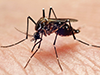
The increase in epidemics fuelled by climate change across the world, and the severe implications they have on the health of the most vulnerable communities, particularly in the Global South, are captured in a groundbreaking research report on climate change and infectious diseases.

On the first ever Health Day at a COP, a new report on climate change and epidemics was released. This report, which was compiled by over one hundred scientists and policy makers, highlights how climate change is fuelling new epidemics across the world, particularly in countries from the Global South.

A short video that summarises the Climate Change & Epidemics 2023 Report produced Climate Amplified Diseases and Epidemics (CLIMADE) consortium. The video and reportwas released at the COP28 Health Day.

CERI Environmental & Social Management Plan (ESMP). The evaluation of the Project’s risks and impacts was done in line with the World Bank’s Environmental and Social Framework (ESF) which was subsequently classified as a low risk rating. Five (5) of the 10 World Bank Environmental and Social Standards (ESS) are applicable to the Project and guides this Environmental and Social Management Plan (ESMP)
Stakeholder Engagement includes the process of engaging stakeholders for a clear purpose to achieve agreed outcomes. It is now also recognized as a fundamental accountability mechanism since it obliges an organization to involve stakeholders in identifying and understanding of the specific program/project and responding to issues and concerns raised by the stakeholders for decisions, actions, and hence improving program/project performance.
This Project Operations Manual (POM) was developed by the core project implementation team at CERI in consultation with other departments, and the World Bank, and describes the management structures and processes related to the implementation of the Project.
CERI has been funded by the World Bank to develop genomics-based surveillance to pathogens in Africa. Here you find information on the project as well as the support documents such as the POM, ESMP, GRM and SEP documentations for the programme.
MOST POPULAR
BLOG

KRISP has been created by the coordinated effort of the University of KwaZulu-Natal (UKZN), the Technology Innovation Agency (TIA) and the South African Medical Research Countil (SAMRC).


Location: K-RITH Tower Building
Nelson R Mandela School of Medicine, UKZN
719 Umbilo Road, Durban, South Africa.
Director: Prof. Tulio de Oliveira