
Growing the Pie: Fluorobiotech Recognised as an Ecosystem Champion
Based in Stellenbosch, Fluorobiotech develops and manufactures complex biological raw materials used in the production of biopharmaceuticals and diagnostics, including vaccines, PCR-based tests, and rapid tests. While building our own manufacturing capabilities and product portfolio, we have consistently taken the view that long-term success in biotechnology depends on strengthening the broader ecosystem around us.
For Fluorobiotech, this philosophy can be expressed simply: don’t just grow your slice of the pie, grow the pie.
Building a sustainable biotechnology industry requires the development of multiple, interconnected links across the value chain, from research and technology development to reagent production, testing, manufacturing, and ultimately commercialisation. Strengthening these capabilities locally can help reduce South Africa’s dependence on imported biotechnology products and raw materials, while creating local demand that supports the emergence and growth of other biotechnology businesses.
As our COO and co-founder, Dr Ross Vermeulen, explains: “A biotechnology company cannot succeed in isolation. Our ambition has never been simply to grow Fluorobiotech, but to help build an ecosystem in which South African science, talent and innovation can translate into products manufactured here and taken to the world. When we build local capability, share expertise and create opportunities for others, we strengthen the entire value chain.”
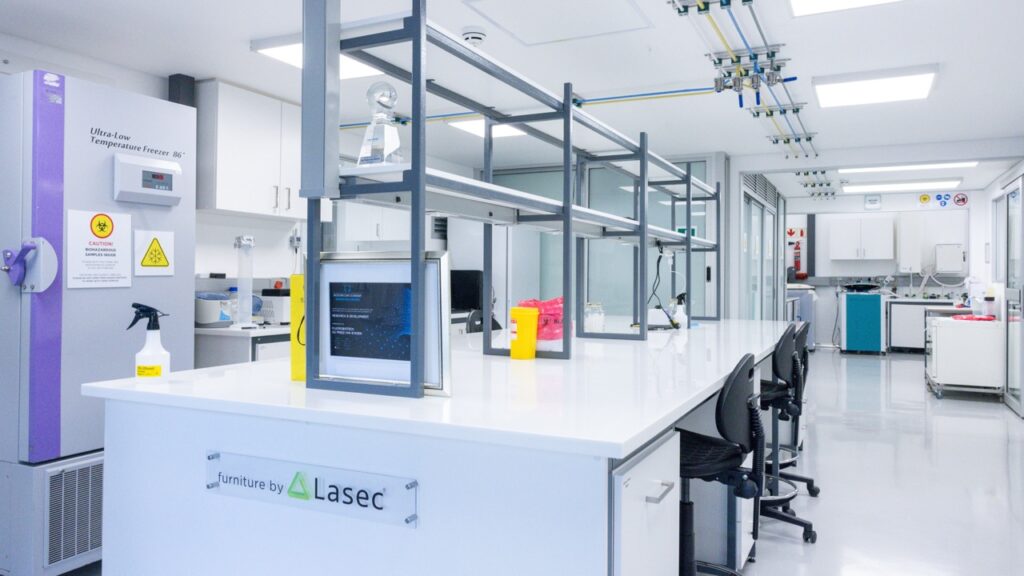
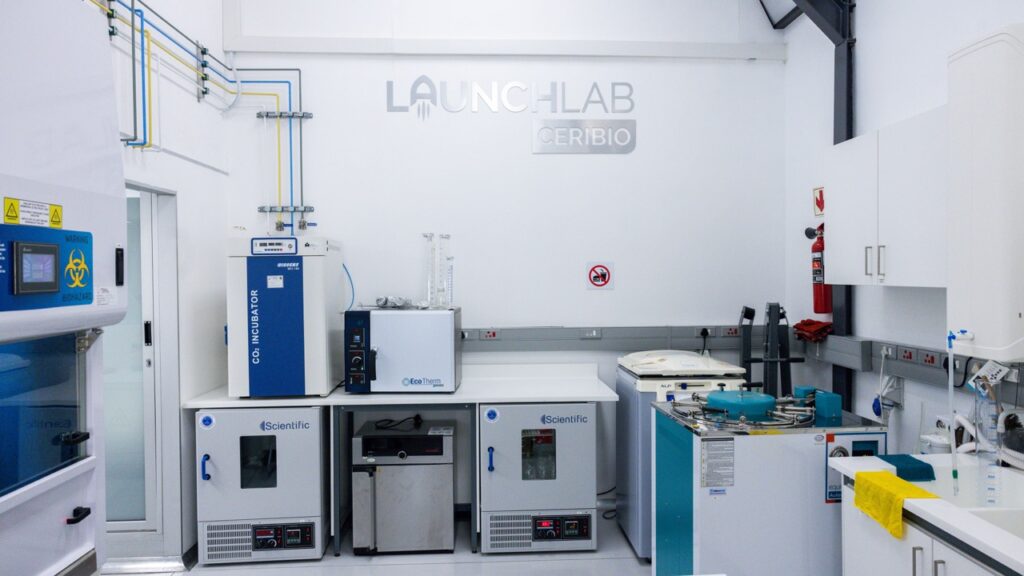
One example of this philosophy in practice is our contribution to establishing the LaunchLab CERI BIO laboratory facility in Stellenbosch. Fluorobiotech spearheaded the renovation, design, and implementation of the facility, which provides biotechnology start-ups with access to affordable, fit-for-purpose laboratory infrastructure where they can develop, validate, and begin commercialising their technologies. We have subsequently continued to support its operation.
CERI and the broader Stellenbosch University innovation ecosystem have also played an important enabling role in Fluorobiotech’s journey, providing an environment in which scientific development, commercialisation, and manufacturing capability can grow together. CERI BIO demonstrates how universities, research institutions, and biotechnology companies can work together to help translate scientific expertise into locally developed products, manufacturing capability, skilled jobs, and commercial activity.
Our approach also extends into our own product development and technical collaborations. Through the local manufacture of recombinant antigens for infectious-disease research and diagnostic development, as well as enzymes used in mRNA production, we are building capability in areas where South African and African researchers, diagnostic developers, and manufacturers have traditionally relied heavily on imported biological reagents.
To date, Fluorobiotech has launched six products, with more scheduled for launch later this year. We currently employ three junior production scientists, one senior production scientist, and a junior quality officer, and have established several local and international partnerships.
Growing this value chain also has a human impact. A stronger domestic biotechnology industry creates opportunities for South Africa to retain and employ more of the talented scientists, engineers, and technical graduates emerging from its universities. Converting local scientific expertise into locally manufactured products and commercially sustainable businesses has the potential to create high-skilled employment while strengthening South Africa’s capacity to respond to its own healthcare and biotechnology needs.
For CEO and co-founder Dr Du Preez van Staden, the Ecosystem Champion Award reflects this broader approach. “When we started Fluorobiotech, we set out to prove that world-class biotechnology could be developed and manufactured here in South Africa. Along the way, we realised that building a successful company also means helping to build the environment in which companies like ours can succeed.
“This recognition is particularly meaningful because it reflects something we have believed from the beginning: our success should create opportunities for others, strengthen local capability and contribute to an ecosystem that can compete globally. If South African biotechnology is going to realise its full potential, we have to build it together.”
Looking ahead, our focus is on expanding our locally manufactured portfolio of recombinant proteins and enzymes, including products supporting infectious-disease diagnostics and emerging mRNA and biopharmaceutical manufacturing. We also intend to extend the reach of our proprietary SelfPrep™ technology through partnerships and licensing, while continuing to collaborate with universities, researchers, manufacturers, and other biotechnology businesses and supporting shared infrastructure such as CERI BIO.
Ultimately, we see Fluorobiotech’s growth and the growth of South Africa’s biotechnology ecosystem as interconnected. Creating globally competitive products and businesses locally should also create opportunities for scientists, engineers, entrepreneurs, and the companies that follow.
Text: MJ van Vuuren
Photos: CERI Media, Charlie Sperring
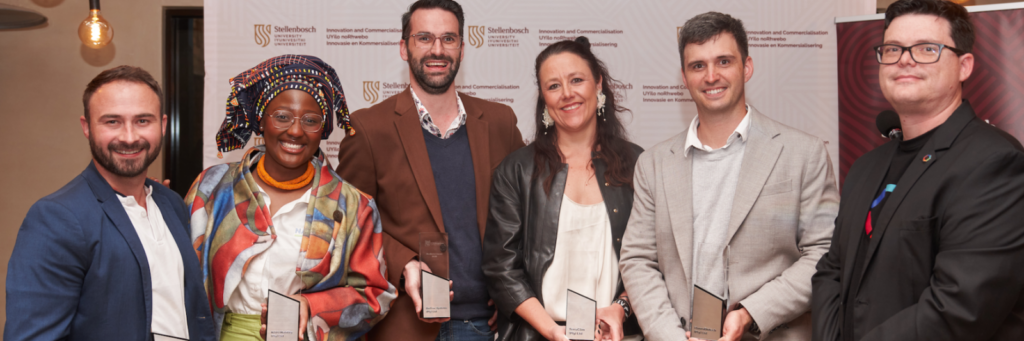
ABOVE: The 2026 SU Enterprises CEO Award winners, from left: Wiehann Lombard (representing CubeSpace), Amohetsoe Shale (Navu), Dr Kyle Klopper (BioTrac Systems), Dr Tara Southey (TerraClim), and Dr Ross Vermeulen and Dr Du Preez van Staden (FluoroBiotech). Photo: Curt Ruiters
News date: 2026-09-23
Links:
KRISP has been created by the coordinated effort of the University of KwaZulu-Natal (UKZN), the Technology Innovation Agency (TIA) and the South African Medical Research Countil (SAMRC).


Location: K-RITH Tower Building
Nelson R Mandela School of Medicine, UKZN
719 Umbilo Road, Durban, South Africa.
Director: Prof. Tulio de Oliveira