
Building One Health Research Networks
By Dr Carla Mavian
When I applied to the Plowright One Health Mentoring Scheme (POMS) in May 2025, I was embarking on building a One Health programme at Stellenbosch University. While I knew the science I wanted to pursue, I did not yet have a network on this side of the world. Since then, POMS has given me exactly that.
Through Professor Fiona Tomley and the Royal Veterinary College in London, I was given the opportunity to join a One Health mentoring network for infectious disease researchers. The scheme supports the career development of future research leaders from the UK and low- and middle-income settings, with additional support from the MRC-funded International Veterinary Vaccinology Network (IVVN).
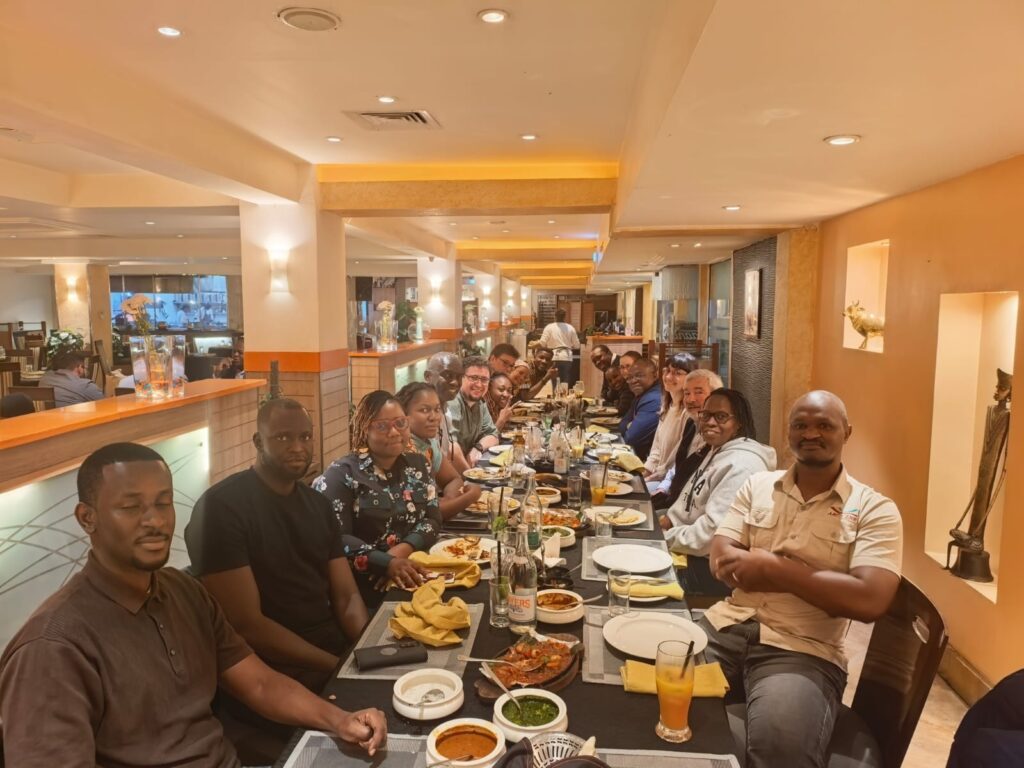
Our cohort began with a workshop in Vienna in August 2025, where mentees and mentors got to know each other. Many of the conversations that started there are still going. Through the scheme, I have found wonderful peers from across Africa, Asia, and the UK, representing many different nationalities. Their perspectives have broadened how I think about my own work.
A leadership course ran until April 2026, while our monthly meetings, where we take turns sharing our research, have kept us connected across time zones and disciplines. I also had the opportunity to chair a peer-to-peer mentoring session on interdisciplinary and international collaboration, where we discussed jargon, authorship, power dynamics, and institutional barriers. This reminded me that some of the most useful advice comes from people at exactly my career stage.
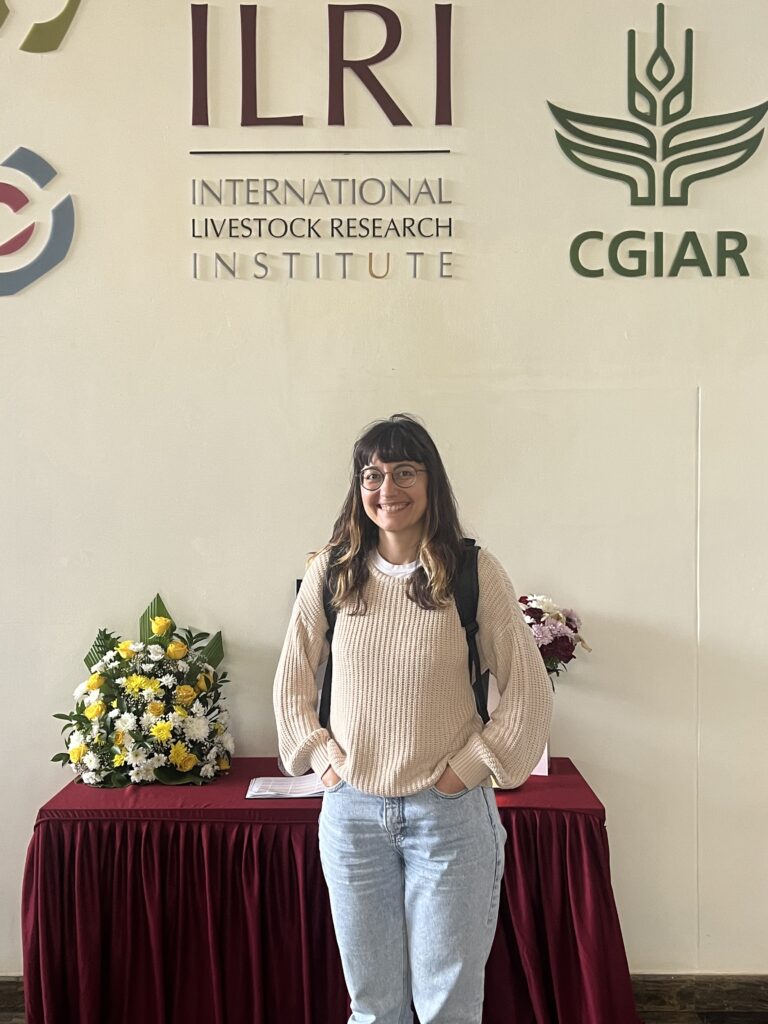
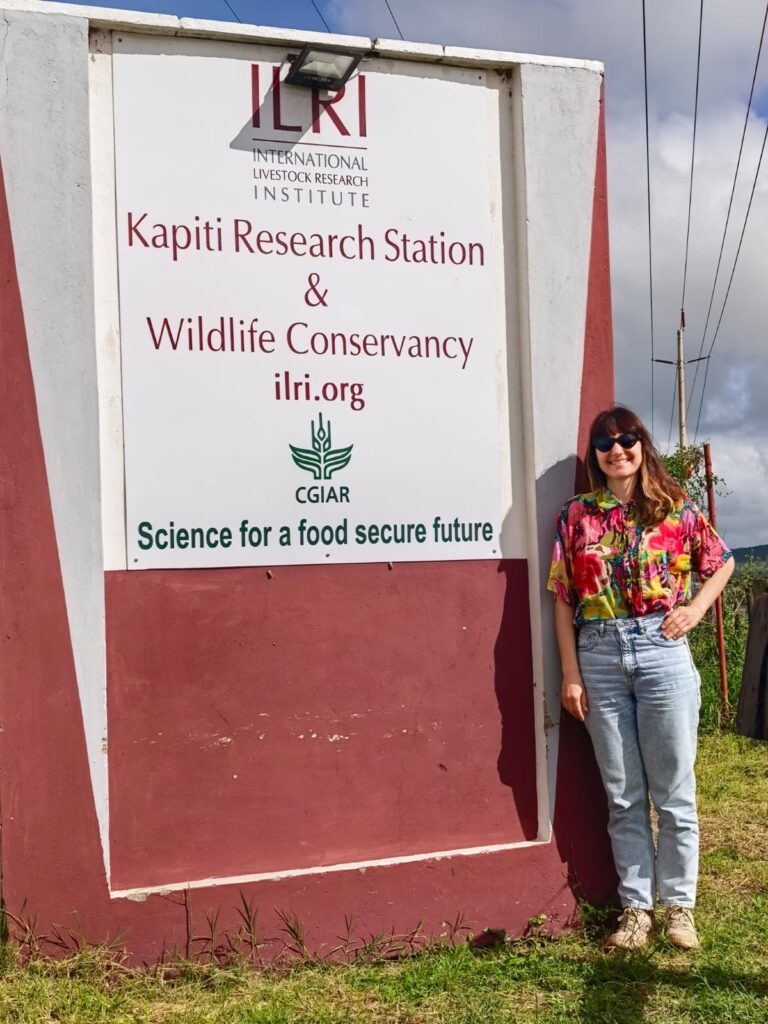
In March 2026, I travelled to the International Livestock Research Institute (ILRI) in Nairobi for the POMS grant-writing workshop. There, my team, with Baty Dungu as our mentor, developed a One Health approach to foot-and-mouth disease (FMD) control, aimed at regaining disease-free status in Southern Africa.
Using Lesotho as a case study, we proposed combining genomic surveillance of FMD strains in cattle, wildlife, and farmed buffalo with policymaker and community engagement, alongside a real-time risk dashboard aligned with WOAH standards. That work is now feeding directly into grant applications for FMD control in Lesotho and South Africa.
My relationship with my mentor has grown well beyond the scheme. Baty and I now collaborate on a Gates Foundation-funded FMD project in Ethiopia and Tanzania, and in 2027 we will co-supervise an MSc student at Stellenbosch University. What began as a mentoring relationship has become a working collaboration, and is already being passed on.
In November 2026, I participated in the POMS online grant development competition alongside another mentee, and our team was awarded funding to travel and meet in person. I will therefore travel to the Pirbright Institute, UK, in February 2027 to develop our ideas into a proposal, give a seminar, and meet the FMD group at Pirbright.
Our aim is to understand the factors driving the recovery of Borneo's bearded pig population and the future risk of African swine fever. Together with CERI's social science team, we are targeting the Darwin Initiative, which funds biodiversity projects in developing countries.
The network has also opened doors beyond its formal activities. With POMS colleagues, and again with CERI's social scientists, I am developing a proposal on Lassa fever that uses the natural variation in transmission across Africa to investigate why zoonotic pathogens emerge in some ecological and social settings but not in others.
One Health asks a lot of us beyond the research itself, from working across disciplines to engaging with policymakers and communities. POMS has given me a space to practise these skills, a cohort to learn alongside, and collaborators I expect to work with for years. I am grateful to Fiona Tomley, the Royal Veterinary College, IVVN, my mentor, and my fellow mentees for making this possible.
News date: 2026-11-25
Links:
KRISP has been created by the coordinated effort of the University of KwaZulu-Natal (UKZN), the Technology Innovation Agency (TIA) and the South African Medical Research Countil (SAMRC).


Location: K-RITH Tower Building
Nelson R Mandela School of Medicine, UKZN
719 Umbilo Road, Durban, South Africa.
Director: Prof. Tulio de Oliveira