
Strengthening Africaâs Outbreak Preparedness
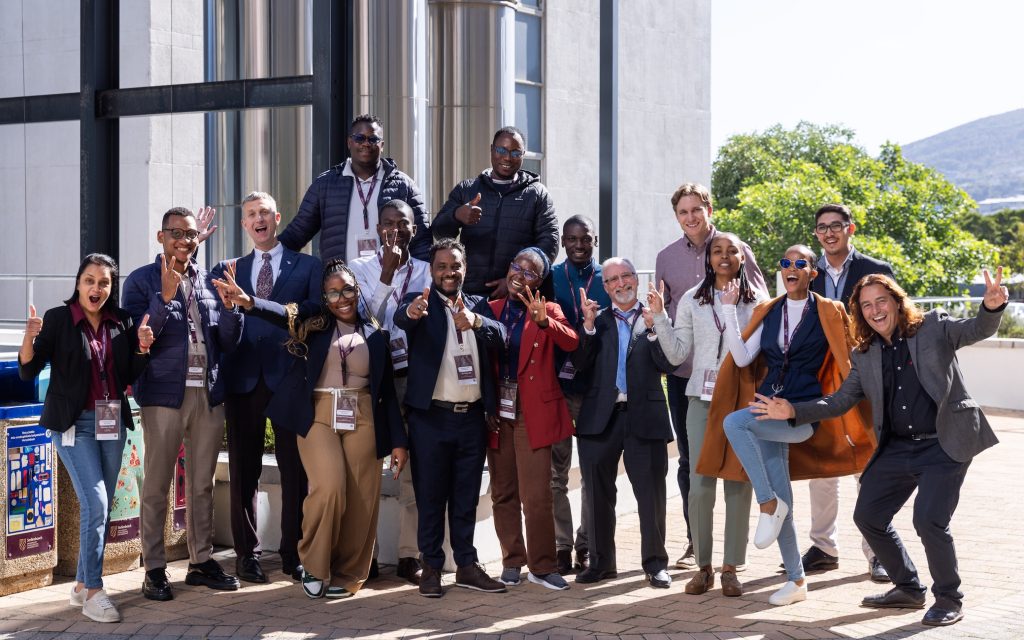
Hosted from 4â12 May at CERIâs laboratory facilities in the Biomedical Research Institute, the workshop brought together participants from the University of Fort Hare, Sefako Makgatho Health Sciences University, the University of Pretoria, the Eswatini National Public Health Laboratory (NPHL), the Ethiopian Public Health Institute, and the University of Rwanda. The training was supported by the Skoll Foundation and Columbia Universityâs Global Alliance for Preventing Pandemics (GAPP).
Focused on the complete VirCapSeq-VERT workflow â a capture-based metagenomic sequencing approach designed to detect all known vertebrate viruses from clinical or environmental samples â the workshop trained participants across both laboratory and bioinformatics workflows, including cDNA synthesis, library preparation, hybridisation capture, sequencing preparation, data quality control, and downstream genomic analysis.
Unlike traditional diagnostic workflows, which typically rely on targeted PCR tests or pathogen-specific sequencing assays, VirCapSeq-VERT offers a far broader surveillance capability. Dr Marije Hofstra from CERI explained that conventional systems are often limited to detecting only pathogens laboratories are already specifically looking for.
âThe PCR screening will only detect a limited number of pathogens,â said Dr Hofstra. âFor every pathogen that you would like to be able to sequence, the laboratory needs to develop, evaluate and implement an assay.â
VirCapSeq-VERT approaches the problem differently. Using a probe set containing nearly one million probes targeting viruses known to infect vertebrates, the method enriches viral genetic material before sequencing, significantly improving the ability to detect and characterise viruses â even when they are present at very low levels.
âThe assay is able to sequence any virus that is known to infect vertebrates within a single laboratory workflow,â Dr Hofstra explained. âIt also allows for variability in the virus, so it should still be able to pick up novel strains.â
This has major implications for surveillance, particularly in settings where laboratories may not yet have dedicated assays for every circulating pathogen. âOnce a laboratory has implemented this single assay, it has immensely expanded its capacity to detect and characterise any viral pathogen, without the requirement to know in advance which virus you are looking for,â said Dr Hofstra.
The ability to detect unexpected or previously unknown pathogens is increasingly important for epidemic preparedness. Dr Lavanya Singh, Head of Laboratory at CERI, said the workshop directly addressed a critical gap in outbreak detection and genomic surveillance across Africa.
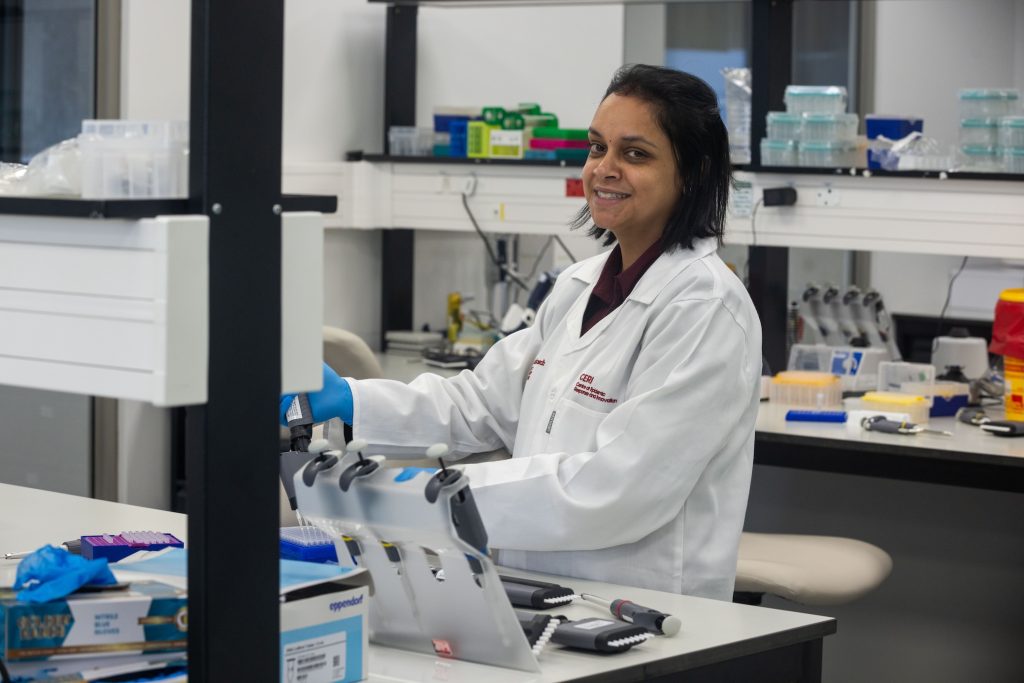
âTraditional diagnostic systems often depend on targeted tests that only identify known pathogens, leaving outbreaks caused by novel or unexpected viruses undetected,â she said. âThis workshop equipped participants with practical skills in viral metagenomics and targeted enrichment approaches, improving the ability of laboratories to strengthen outbreak preparedness, early-warning surveillance, and genomic monitoring of emerging infectious diseases across Africa.â
Dr Singh added that hosting the training at CERI was equally important from a capacity-building perspective. âAfrica faces a high burden of emerging and re-emerging infectious diseases, yet access to specialised metagenomic training and sequencing technologies remains uneven across the continent,â she noted. âBy bringing researchers, virologists, and public health professionals together in an African centre of excellence, the workshop promoted regional collaboration, skills transfer, and sustainable genomic surveillance capacity tailored to African public health priorities.â
For many of the facilitators, the workshop was also about building long-term local expertise and strengthening regional scientific networks. Lucious Chabuka, CERIâs Laboratory Manager, said local capacity-building remains essential for strengthening independent outbreak response systems.
âDeveloping local expertise in sequencing, bioinformatics, data interpretation, and laboratory workflows reduces reliance on external laboratories, shortens turnaround times, and improves outbreak preparedness and surveillance capacity,â he said.
Chabuka also noted that bringing together participants from different institutions and countries created opportunities for knowledge exchange and future collaboration. âScientists and laboratory professionals from different backgrounds often face unique challenges related to infrastructure, resources, and disease burdens,â he said. âSharing practical solutions and lessons learned helps build more resilient and adaptable systems.â
Kerwin Liedeman, PhD Fellow at CERI and facilitator at the workshop, emphasised the importance of teaching both wet-lab and bioinformatics components together.âModern genomic surveillance relies on both high-quality laboratory methods and robust bioinformatic analysis,â he said. âTeaching both components ensures that participants understand the complete workflow â from sample processing to data interpretation.â
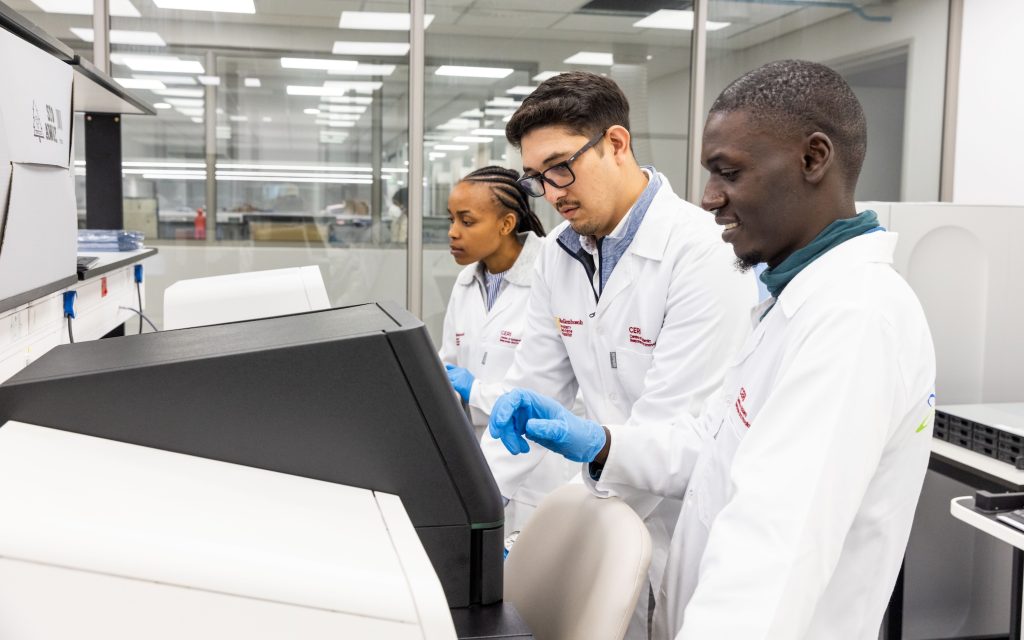
Participants were trained not only in running assays, but also in troubleshooting workflows and interpreting sequencing findings in real-world surveillance contexts.
âViral discovery is essential for outbreak preparedness because many emerging infectious diseases originate from previously undetected or poorly characterised viruses,â said Liedeman. âBy identifying and sequencing viruses early, we can better understand transmission patterns, monitor mutations, and assess potential public health risks before outbreaks escalate.â
Facilitators from Columbia Universityâs Global Alliance for Preventing Pandemics also highlighted the broader importance of expanding access to sequencing technologies globally.
Dr J. Kenneth Wickiser, Administrative Director of the Global Alliance for Preventing Pandemics (GAPP) at Columbia Universityâs Mailman School of Public Health, said many current diagnostic workflows still leave large numbers of illnesses unexplained.
âWhen clinical researchers and public health professionals analyse samples collected from patients and participants presenting with symptoms of interest, those testing positive for the suspected pathogen or small number of pathogens range from 20â50%,â said Dr Wickiser. âThe obvious question then is what is the causative agent for the other 50â80% testing negative?â
Dr Wickiser described VirCapSeq-VERT as a complementary tool capable of identifying unexpected pathogens, coinfections, and viruses for which no routine diagnostic tests yet exist. âThe strength of VirCapSeq-VERT is to identify and characterise known pathogens that were unexpected, unknown pathogens to which there are no current RDTs or PCR assays, and coinfections in both clinical and environmental samples like wastewater,â he explained.
Dr Wickiser also praised CERIâs role in supporting long-term scientific capacity-building across the continent. âThe CERI team is uniquely poised to have significant positive impact across the continent because they have an amazing facility, top-tier instrumentation, world-class experts in both wet lab and bioinformatics fields, and most importantly, they are trusted professionals dedicated to sharing and building capacity,â he said.
Jack Collins, Staff Research Associate at GAPP, said the collaborative nature of the workshop was one of its strongest features. âIâve been impressed by the range of research priorities, laboratory capacities, and challenges represented by the participants,â he said. âIt has been valuable to see them exchange ideas, compare approaches, and learn from one anotherâs experiences across different settings.â
Collins noted that workshops like this help create sustainable capacity by enabling participants to transfer skills back to their own institutions and networks. âThat strategy is critical for expanding genomic surveillance and outbreak response capacity across Africa,â he added.
For Dr Samuel Yingst, GAPP Africa Director, veterinary virologist, and diagnostics and One Health specialist, the workshop reflected a much larger shift taking place across African public health and scientific systems. Having worked in global health across Asia, Europe, and Africa for more than 25 years, Dr Yingst said strengthening independent disease detection capacity across the continent is critical for future health security and outbreak preparedness.
âMy dream is to be a part of enabling all countries in Africa to independently detect emerging and re-emerging diseases, including Disease X, while maintaining full data sovereignty,â said Dr Yingst.
He said technologies such as VirCapSeq-VERT and collaborative training models between Columbia University and CERI are essential for building sustainable surveillance systems. âI believe that public health and health economics are one and the same,â he noted. âVirCapSeq-VERT is an essential tool for cost effectiveness, and the CERI focus on efficiency and resource sharing is key to access and health security.
Dr Yingst added that initiatives like the workshop are part of a broader transition taking place across African science and innovation systems. âWe are in a period of transition in Africa from donor dependence to a bioeconomy,â he said. âI believe this group will be a part of leading us there.â
By Katrine Anker-Nilssen
News date: 2026-05-18
Links:
KRISP has been created by the coordinated effort of the University of KwaZulu-Natal (UKZN), the Technology Innovation Agency (TIA) and the South African Medical Research Countil (SAMRC).


Location: K-RITH Tower Building
Nelson R Mandela School of Medicine, UKZN
719 Umbilo Road, Durban, South Africa.
Director: Prof. Tulio de Oliveira