
How SWEAT Africa Sparks Hire
text: Katrine Anker-Nilssen photo: Supplied
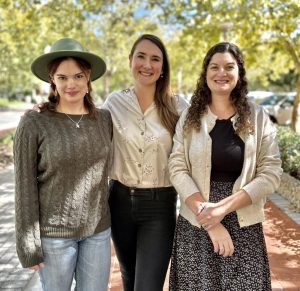
For Dr Gestél Kuyler, Co-founder and Chief Executive Officer (CEO), and Dr Elaine Barnard, Co-founder and Chief Operating Officer (COO) of Nanosene, SWEAT was part of a bigger journey. Nanosene attended as part of the Open Startup BRAIN 5.0 cohort, with the event marking the final leg of the bootcamp. The team was selected to open the startup segment on stage, pitching to investors, potential collaborators, and partners.
They came to SWEAT looking for meaningful connections, visibility, and exposure to the broader startup and innovation ecosystem. What they did not plan for was meeting someone who would soon become part of their team.
Tatum Commaille, now Communication and Administration Support at Nanosene, arrived at SWEAT with curiosity rather than a fixed agenda. She had started out in a BSc degree before realising she had a deep passion for working with people and telling their stories. Tatum later moved into Humanities, graduating last December, but retained what she describes as âa love for science and earnest curiosityâ about what she had yet to understand.
âIt was this curiosity and a chance invite that brought me to SWEAT,â says Tatum. âMy goals were simply to learn more about the change-makers around me, and to experience something new.â
Her curiosity quickly found a focus. âI was very impressed at Nanoseneâs pitching at SWEAT,â she says. After mentioning this to a mutual contact from LaunchLab, she heard that Nanosene might have an opening for an intern and was offered an introduction to the founders. Tatum took the opportunity. Between events, she approached Dr Kuyler and Dr Barnard and introduced herself as their âfuture internâ. âI explained who I was and what I did, and requested we arrange a meeting in the next week,â she says. âSome discussions and a lab tour later, I joined the team. The rest is recent history!â
For Dr Kuyler, Tatumâs initiative stood out immediately. âIntroducing herself as our âfuture internâ was bold, but it was backed by genuine curiosity and clarity in how she communicates,â she says. âShe brought a different perspective, not from a scientific background, but from a storytelling and people-focused lens, which is valuable for us as we grow.â
The pace was quick. The team met Tatum on the Friday at SWEAT, exchanged numbers, and by Sunday she had followed up. By Monday, they were meeting for coffee. âThatâs where the conversation shifted,â says Dr Kuyler. âIt moved from a chance interaction to a more intentional discussion around her skillset, motivation, and how she could fit into the team. From there, it became about alignment, and within a few weeks she had joined the team.â
For Nanosene, the decision was not only about experience on paper. It was about mindset. âAt this stage, weâre not just onboarding for technical skill,â says Dr Kuyler. âWeâre building a team that takes ownership, shows up, and is willing to learn and grow with the company. Skills can be developed, but how someone shows up and takes initiative is what builds a high-performing team.â That, she says, is one of the advantages of meeting potential team members in an environment like SWEAT. Founders get to see how people think, engage, and present themselves in real time â qualities that are difficult to capture through a CV or formal interview.
For Dr Barnard, the value of SWEAT lies in the mix of
people it brings together. âEvents like SWEAT are valuable because they bring together people with different perspectives and experiences in one space,â she says. âOften the biggest value comes from the conversations that you did not plan for.â
The setting matters too. For Tatum, SWEAT felt different from more formal networking environments. âThe free-flowing programme and natural setting created an atmosphere that removed much of the stress and intensity that can accompany networking,â she says. âThe spacing of the events allowed for socialising and connecting between sessions. People seem more approachable sitting cross-legged on a lawn than parked stiffly behind a desk.â
Dr Barnard echoes this: âThe relaxed setting made people more open and approachable, which allowed genuine connections to form. It was less about formal networking and more about shared conversations, interest, and opportunities.â
For Tatum, joining Nanosene has opened a door into a field she might not have chosen intuitively, but one she is now enjoying. âI was truly impressed by the co-founders: two powerful, intelligent, and poised women in STEM, pioneering a technology that could revolutionise its field,â she says. âAs the start-upâs new upstart, my goal is to contribute meaningfully to the success of Nanosene, and hopefully learn as much as possible from its incredible team.â She says the opportunity allows her to apply herself to something new, while gaining exposure to the intricacies of running a business and meeting many interesting and impressive people along the way.
For the broader ecosystem, this story captures the role SWEAT can play beyond the formal programme. âAt SWEAT, we were pitching in front of investors, potential collaborators, and partners, so the focus was on building visibility and strategic relationships,â says Dr Kuyler. âWhatâs powerful is that, alongside those outcomes, equally valuable connections can emerge organically. In the right environment, youâre not just meeting stakeholders, youâre building a pipeline of relationships across talent, partnerships, and future opportunities.â
Dr Barnard agrees: âIt shows that SWEAT creates real opportunities for meaningful connections across the ecosystem. It brings together people from different backgrounds in a natural way, and those informal interactions can lead to valuable opportunities â like meeting someone who later becomes part of the Nanosene team.â
For Tatum, the story also speaks to the importance of human connection in an increasingly digital world. âIt is easy to lose sight of the human on the other end of the interaction,â she says. âTech has its uses, but when it comes down to it, people need other people. Many of the best connections and introductions happen coincidentally in informal spaces like SWEAT.â
Asked whether she would attend SWEAT again, Tatumâs answer is simple: âAbsolutely. It is a meeting of incredible minds and the genesis of opportunities. And you never know what might come of it â case in point.â
For Nanosene, it reinforced the importance of being present in the ecosystem. âSometimes the most useful opportunities are not the ones you planned for,â says Dr Barnard, âbut the ones that happen naturally by simply being there and engaging with people.â
In this case, a pitch, a conversation, a coffee, and a follow-up became a hire. That is the impact of SWEAT: creating the right environment for opportunity to take root.
âPeople need other people. Many of the best connections happen coincidentally in informal spaces like SWEAT.â
â Tatum Commaille
News date: 2026-05-18
Links:
KRISP has been created by the coordinated effort of the University of KwaZulu-Natal (UKZN), the Technology Innovation Agency (TIA) and the South African Medical Research Countil (SAMRC).


Location: K-RITH Tower Building
Nelson R Mandela School of Medicine, UKZN
719 Umbilo Road, Durban, South Africa.
Director: Prof. Tulio de Oliveira