
From Pipettes to Python: A Safari from Kenya to CERI
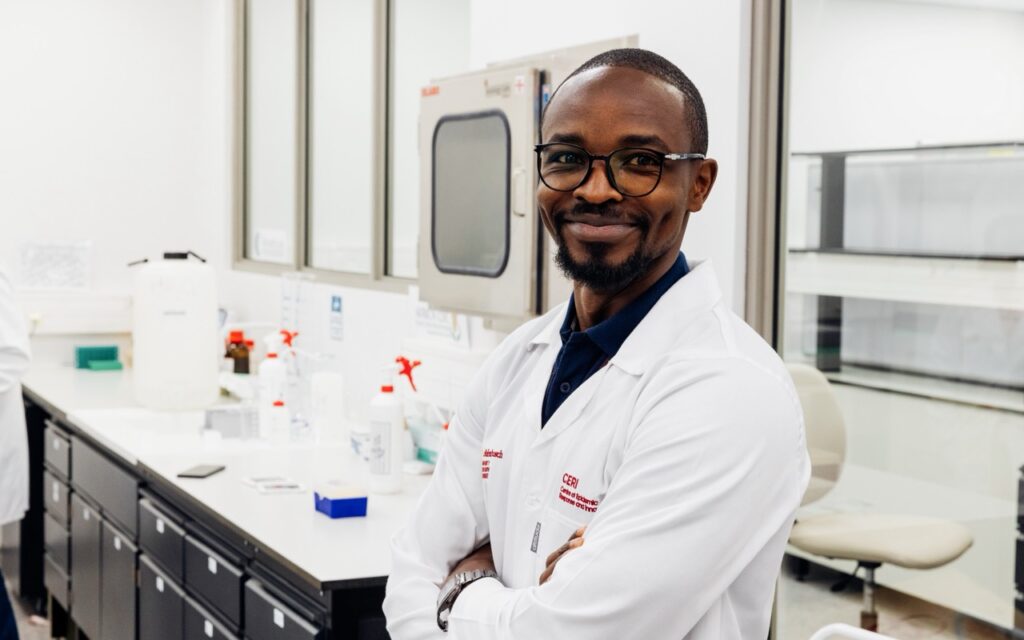
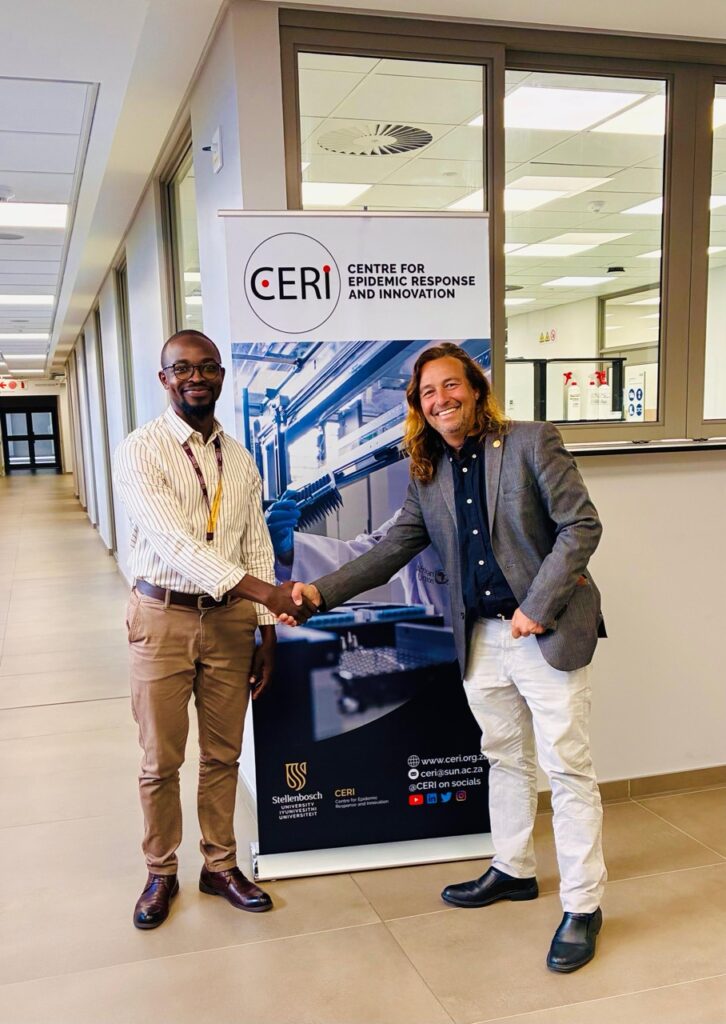
For me, home is Kenya. It is where my scientific journey began, and where I hope much of its impact will be felt. Since childhood, I have been curious and in love with hands-on science. Encouraged by my parents, I developed a fascination with the natural sciences. Little did I imagine that this curiosity would take me from the microbiology laboratories of western Kenya to the rather different world of Python scripts and pathogen genomics at Stellenbosch University.
This safari began at a propitious moment while studying at Masinde Muliro University of Science and Technology (MMUST). I became involved in a research collaboration with mentors at Cambridge, UK, and Pretoria, South Africa. This opened doors to technologies and opportunities that were otherwise beyond my reach. My first MSc investigated multidrug-resistant Staphylococcus aureus associated with infections after surgery in western Kenya. Through whole-genome sequencing, which reads an organism’s complete genetic code, I began to appreciate the extraordinary complexity of pathogens and how readily they evolve and become resistant to antimicrobials. But the deeper I looked, the more questions emerged.
Africa is generating vast amounts of genomic information, yet much of it has undergone only surface-level analysis. Sequencing a pathogen is one thing. Understanding what its genome tells us about disease, antimicrobial resistance (AMR), and evolution is quite another.
My father once advised me to keep a pen and paper beside my bed. “Most of the greatest ideas strike at 3am,” he would say. One thought stayed in my mind: what if some of the answers we seek are already hidden in the genomic information we have generated? I wanted to be the person behind the screen, exploring that data and uncovering its hidden nuggets. This was the gap that drew me towards bioinformatics.
Put simply, bioinformatics brings biology and computing together to make sense of complex biological information. Not only does it allow us to investigate how pathogens evolve, but also to identify genetic changes linked to drug resistance. For Africa, where infectious diseases remain a major public health challenge, the ability to ask questions that conventional laboratory methods alone cannot easily answer, using the resources we already have, is crucial.
So I started a second MSc in Bioinformatics of Infectious Diseases and Pathogen Genomics at CERI. Being selected as one of seven African STARS Fellows from over 1 000 applicants to pursue the inaugural structured MSc was a pivotal moment for a budding researcher buoyed by the beauty of his dreams.
Eight months into the programme, I have moved rather quickly from pipettes to Python. Hosted at the medical campus, I now spend time writing and fixing code, analysing genomic datasets, and automating computational workflows. It is fascinating work, indeed, although a misplaced character can bring hours of computation to an abrupt halt. The computer, I have discovered, is remarkably indifferent to one’s good intentions.
Beyond the screen, South Africa has much to offer. Stellenbosch’s magnificent mountains and vineyards provide a rather agreeable backdrop to research life. More importantly, I have found myself among people whose curiosity and generosity make the experience worthwhile. Seminars, conversations with mentors, and working within multicultural and multidisciplinary teams have broadened my scientific outlook considerably.
My current research examines nontuberculous mycobacteria, relatives of the bacterium that causes tuberculosis. These organisms are widespread in the environment, yet some cause serious human infections. Much remains unknown about their genomic diversity and resistance to treatment. I hope to help close this knowledge gap by comparing their genomes using computational tools.
Yet perhaps the greatest lesson has come from the people around me. I am fortunate to learn from generous mentors and researchers who put research excellence above self. Under Prof Tulio de Oliveira’s leadership, CERI has created an environment in which collaboration and discovery thrive.
My own path here has made me a link between collaborators at MMUST, Cambridge, and Dr Emilyn Costa Conceição’s group at CERI within the Genomics of AMR programme. Prof Martin Welch (Cambridge) and Dr Anthony Sifuna (MMUST) have encouraged me to look beyond the genes to the proteins they make. These interactions continually remind me that good science begins with asking the right questions, and that new discoveries rarely happen in isolation.
As an African STAR, I am convinced that the future of Africa’s research will depend as much on the people and collaborations we nurture as on the technologies we acquire. My ambition is to contribute to that future as a next-generation researcher, strengthening pathogen genomics and bioinformatics capacity in Kenya and beyond.
My dream is to see Africa not merely supplying data to global research but increasingly leading the questions and discoveries that shape our response to infectious diseases. This conviction aligns with CERI’s vision and Sustainable Development Goal 3 (good health and well-being).
After all, the safari is not only about becoming a better researcher, but also about helping to create opportunities for others to ask better questions and pursue their own contributions to science. I remain grateful to the African STARS Fellowship and the Mastercard Foundation for helping me contribute to that future.
Kenya is home. CERI has become another. And the safari continues.
Nicholas Nyabera, African STARS Fellow
MSc candidate, Bioinformatics of Infectious Diseases and Pathogen Genomics
News date: 2026-10-26
Links:
KRISP has been created by the coordinated effort of the University of KwaZulu-Natal (UKZN), the Technology Innovation Agency (TIA) and the South African Medical Research Countil (SAMRC).


Location: K-RITH Tower Building
Nelson R Mandela School of Medicine, UKZN
719 Umbilo Road, Durban, South Africa.
Director: Prof. Tulio de Oliveira