
From Heartbreak to the HERD
By Prof Jo-Ann Passmore
Nearly three decades after losing a beloved horse to colic, Prof Jo-Ann Passmore is bringing her expertise in mucosal immunology to equine health. Her deeply personal journey has inspired the HERD study, which aims to establish South Africa’s first comprehensive equine microbiome reference baseline.
My love affair with horses began decades ago in Noordhoek. In the 1990s, before children and the demands of my academic career, my soul was literally tethered to a spirited horse named Underwood. When Underwood retired, Missy, a gentle thoroughbred mare, stepped into my life.
But heartbreak followed. During an exceptionally hot January heatwave in Cape Town in the early 2000s, we lost Missy to severe colic. As a scientist, I knew colic was fundamentally a catastrophic breakdown of the hindgut. I was simply devastated.
Soon after, life intervened. Raising young children and paying school fees meant horses became an unaffordable “luxury”. I put my passion in a closet (so to speak), loving horses from afar for nearly thirty years, convinced that chapter had closed.
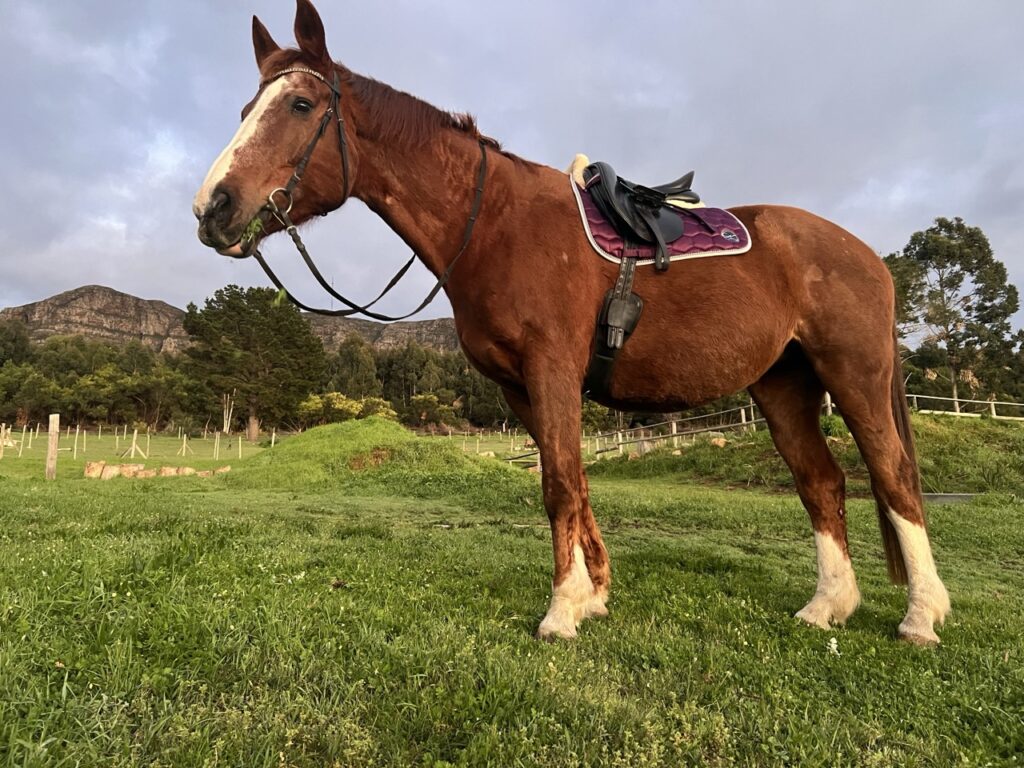
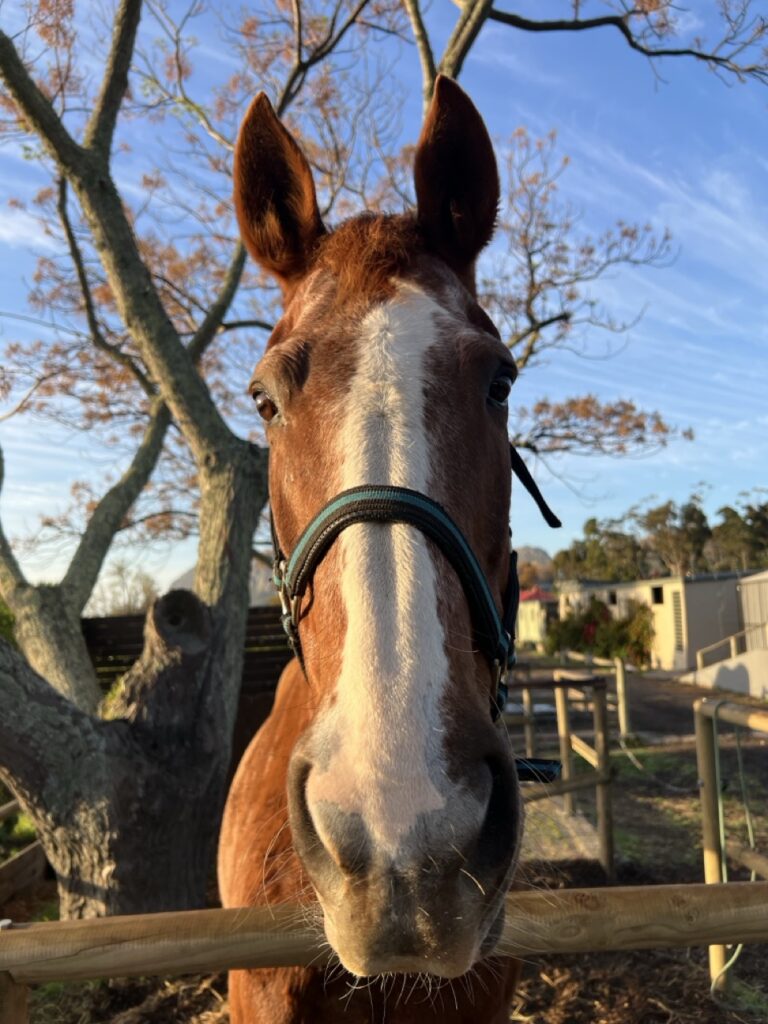
Then came my fifties. With my children grown and my career in mucosal immunology established, the quiet pull of nature returned. At 54, after three decades out of the saddle, I met Adwina.
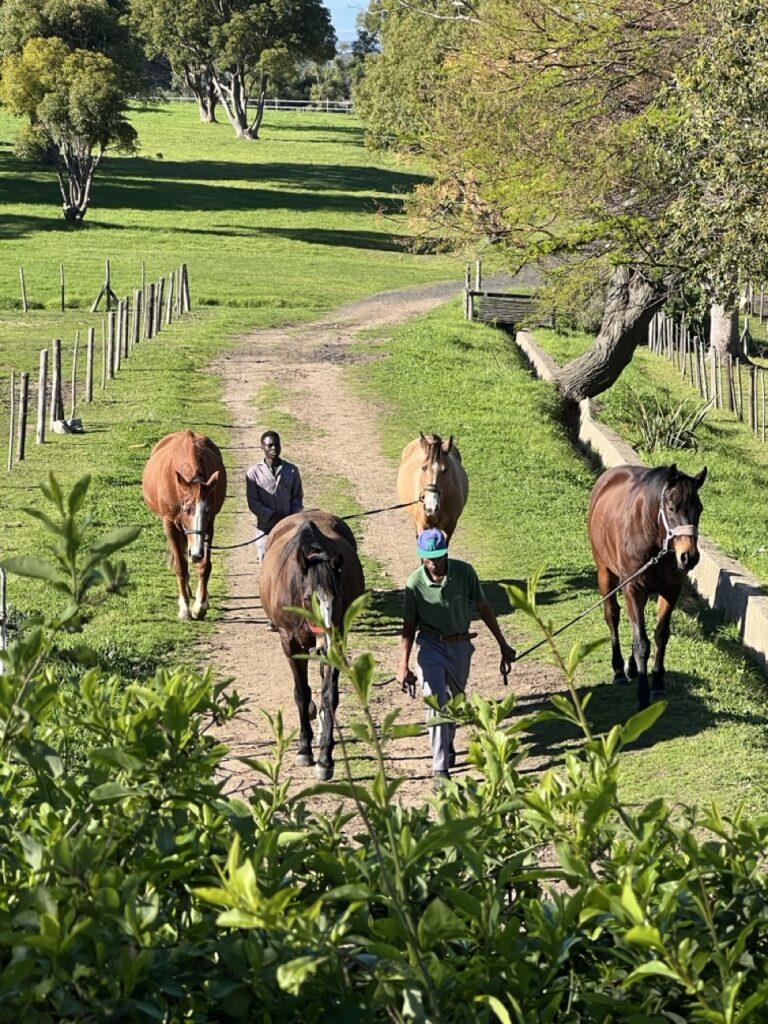
Being with Adwina and her herd at the lovely Mountainview Stables in Tokai brought immense peace and reignited my scientific curiosity. As I stood in her paddock on a hot day, hearing warnings of the extreme El Niño summer predicted for South Africa in 2026/2027, the memory of losing Missy resurfaced with sharp urgency.
Unlike humans, horses are obligate hindgut fermenters. Their massive caecum and colon host a delicate, highly specialised microbial bioreactor responsible for extracting energy from fibrous forage and maintaining systemic immunity. In horses, the microbiome is not just a passenger; it is their engine.
Yet extreme heat places an enormous toll on these magnificent creatures. When temperatures soar, blood flow is redirected away from the gut towards the skin for thermoregulation, potentially depriving the mucosal lining of oxygen. The result can be rapid microbial dysbiosis, compromised gut barrier integrity, endotoxaemia, and the devastating spectre of colic – the condition that took Missy.
Despite this profound physiological dependence, rigorous, scientifically grounded equine microbiome research remains scarce globally and almost non-existent in South Africa. Much of horse health management relies on empirical feeding practices rather than high-resolution microbial data.
We want to change this.
Through the HERD study, we are establishing an intensive longitudinal cohort tracking Adwina and her herd across seasonal extremes, blistering heatwaves, and management transitions. Using the same cutting-edge sequencing and mucosal immunology pipelines we deploy for human health at CERI, we are building South Africa’s first comprehensive equine microbiome reference baseline.
Our aim is to create a gold-standard benchmark against which future research on gut health, heat resilience, and disease prevention in South African horses can be measured.
HERD embodies the true spirit of One Health – the understanding that mucosal resilience and climate stress connect all living species.
But on a personal level, it is a full-circle healing journey. It honours Missy’s memory, celebrates the sacrifices made for family, and finds purpose in the paddock with Adwina.
We are finally able to give these beautiful creatures the rigorous science they deserve.
News date: 2026-10-26
Links:
KRISP has been created by the coordinated effort of the University of KwaZulu-Natal (UKZN), the Technology Innovation Agency (TIA) and the South African Medical Research Countil (SAMRC).


Location: K-RITH Tower Building
Nelson R Mandela School of Medicine, UKZN
719 Umbilo Road, Durban, South Africa.
Director: Prof. Tulio de Oliveira