
Solving Africa’s biggest Challenges through Creativity and Collaboration
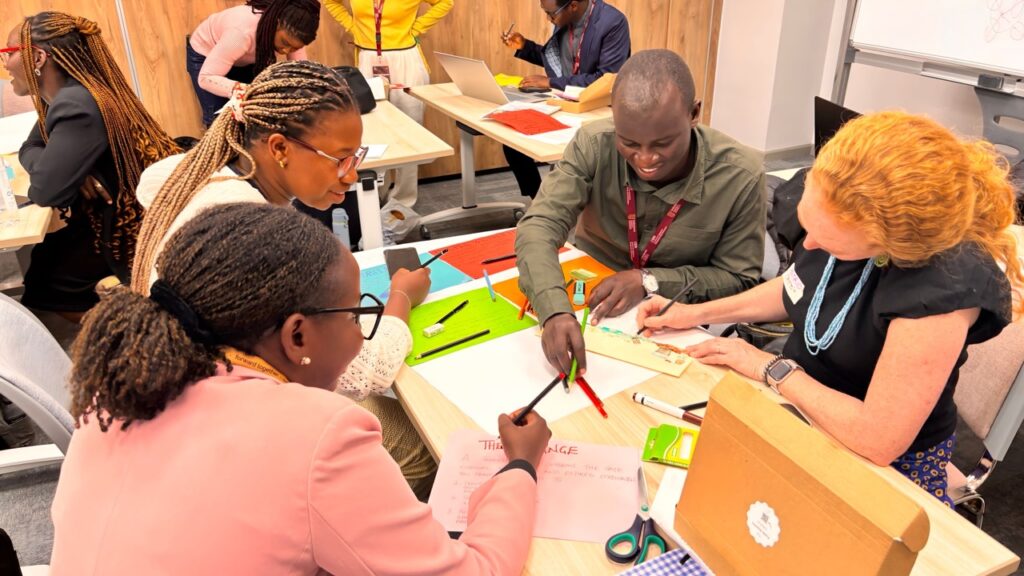
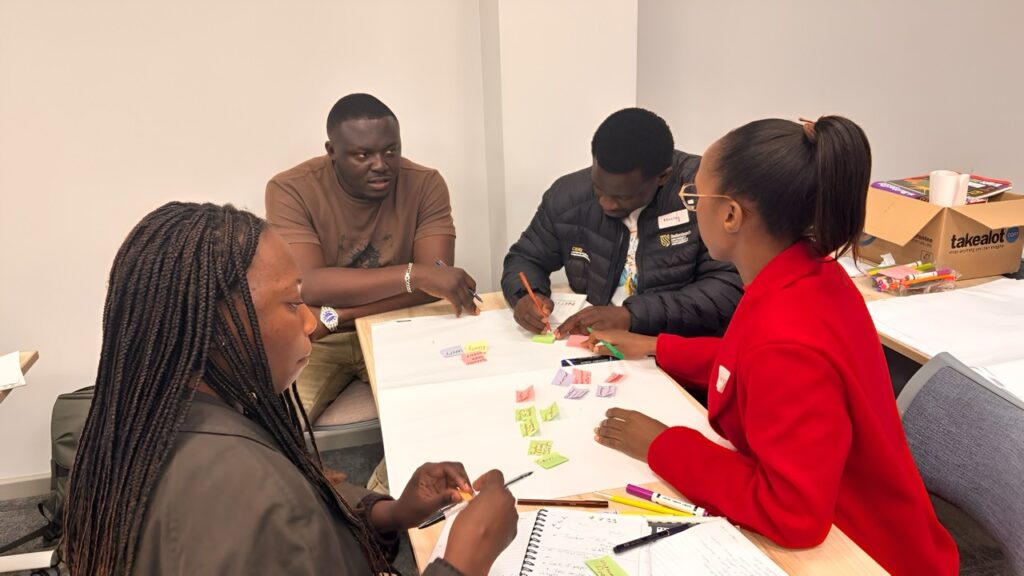
ABOVE: Team A (left), who focused on the safe disposal of unused and expired medication, working on their Canvas alongside Dr Treffry-Goatley, and Team C (right) working on their Canvas. The group aimed to use solar power to ensure accessibility of temperature-sensitive medication in areas without electricity to power fridges
This was the focus of the Creativity, Collaboration and Impact (CCI) Workshop, delivered to the current cohort of African STARS Fellows in collaboration with the Public Squares Initiative and CERI’s Social Innovation Unit (SIU). Taking place from 7 – 9 September 2026, the workshop aimed to equip fellows with the knowledge and skills to engage communities, collaborate effectively, and ensure their solutions are impactful and sustainable.
Training scientists for engaged, collaborative research
Prof Brian Fox opened the workshop with a powerful statement: “Science is for people”. It was a reminder that research has the power to improve lives, influence policy and drive innovation. However, as societal issues grow more interconnected, scientists need to collaborate and work beyond academia for science to be responsive and relevant.
Wicked problems such as climate change, disease outbreaks, mental health and unemployment are too complex for any single discipline to solve alone. They require multiple stakeholders in the research process and for problem solving to be approached in a creative way. This is what it means for research to be engaged and collaborative: working closely with those most affected by an issue, and working not just with other academics, but with government and industry too.
The CCI Workshop recognised that scientists need to be trained in this kind of research. Engaged, collaborative work calls for a different skill set than what traditional academic training typically provides including co-producing knowledge with non-academic partners, science communication, public engagement, and participatory research design.
Over the three days of the workshop, participants were guided by 5 questions:
- What challenge are we seeking to address?
- What change are we trying to achieve?
- Whose knowledge, experience, and expertise are needed?
- How should we collaborate and engage?
- How can we maximise the impact of our research or innovation?
These questions anchored participants' thinking as they developed their approach to their challenge.
On day one, fellows identified a challenge they wanted to work on throughout the workshop. Divided into four groups, each group explored an important and relevant challenge facing the African continent today:
- How do we make Africa malaria-free by 2030?
- How can we improve poorly designed cities?
- How can we build a framework for safe disposal of unused and expired medication?
- How can we make temperature-sensitive medication accessible in areas without reliable refrigeration?
Each team mapped the knowledge, skills, and expertise needed to address their challenge, formed an initial team composition, and identified key stakeholders such as community leaders, policymakers, businesses, and organisations.
Day two focused on meaningful collaboration and community engagement. Fellows practised creative research methods such as digital storytelling, context mapping and photovoice. They considered why, when, with whom, and how each could be used, and used these insights to develop a collaboration and engagement strategy with their identified stakeholders.
Dr Astrid Treffry-Goatley, Programme Manager of the Public Squares Initiative and co-lead of the SIU, explained the thinking behind the workshop's design: "We wanted to move the fellows from thinking individually about their research and the techniques that they're learning, towards working as teams so that they can identify a challenge, think about the change they want to get to, and start working on the mechanisms and people they'd like to work with along the journey."
Throughout the workshop, fellows engaged with short presentations, practical and creative activities, reflections, and discussions, alongside dedicated time to develop their team's Collaboration & Impact Canvas – a large, shared sheet of paper used to think through and develop a research or innovation project together. This approach is widely used in innovation, entrepreneurship, and impact planning, and was adapted specifically for the workshop.
Pathways to Impact
By day three, each team's canvas had taken full shape. Drawing on the strategies developed over the course of the workshop, and informed by a presentation from Bushra Razack, former CEO of Philippi Village, on the successes, challenges, and innovative thinking behind the hub’s development, fellows identified concrete next steps to ensure their research delivers meaningful impact for its intended beneficiaries.
Each group developed a distinct "pathway to impact" suited to its unique challenge. Grounded in creative and novel approaches, these pathways were geared toward ensuring that any resulting change would be sustainable, relevant, and supported by communities. The pathway integrated key insights from across the three days, including which stakeholders to engage and when, which creative research methods could involve communities in the research process to capture their perspectives and experiences, and how emerging challenges could be addressed through innovative approaches. As Bushra put it: “Be open to learning from the community around you, the people experiencing the problem hold knowledge and experience you may never find on paper.”
Zooming out and returning to the five guiding questions, the pathways told the story of each team's journey from identifying their wicked problem and the change they hoped to see, to understanding who needed to be involved and how, right through to a concrete set of actions for moving their research into action. It served less as a fixed plan and more as a living map, one that fellows could return to and adapt as their work continued beyond the workshop.
The way research gets done matters. Creativity, collaboration, and meaningful engagement should not be add-ons in the research process. They should be integrated from the very start to strengthen research, broaden its relevance, and increase its potential to contribute to sustainable change. This is what it means to move from ideas to impact: approaches challenges with creativity and not working in isolation, but alongside those who make solving Africa's biggest challenges possible.
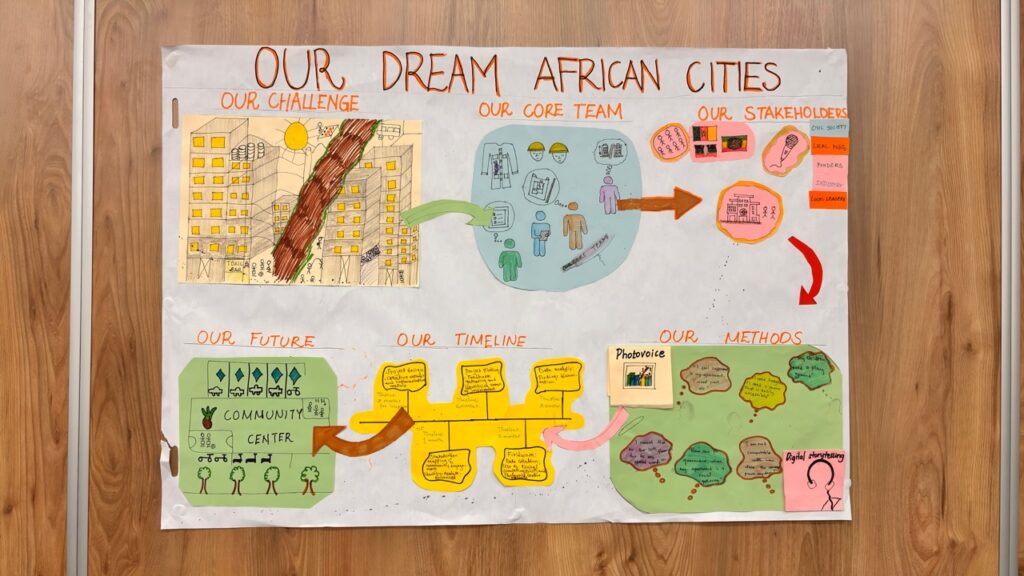
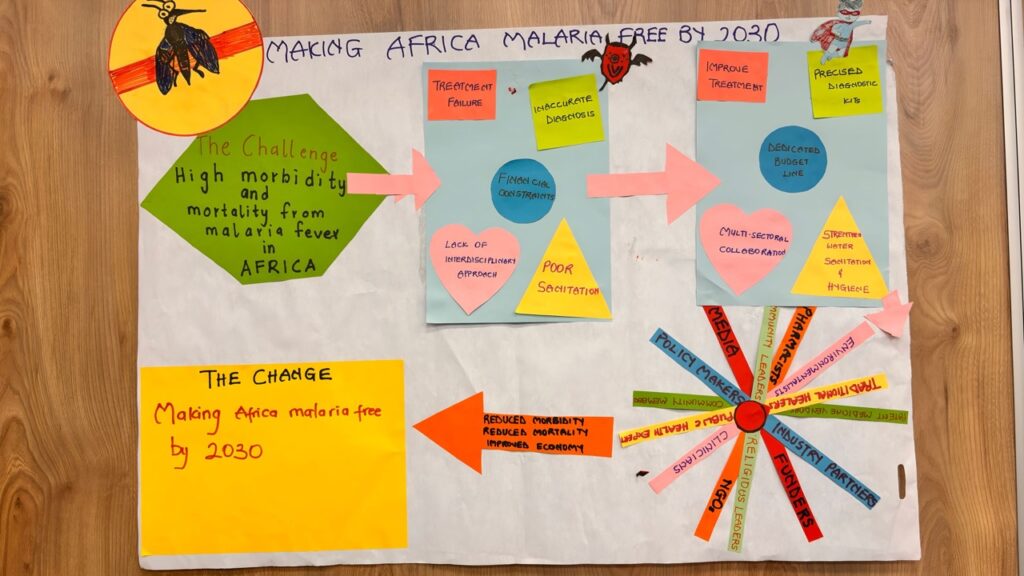
ABOVE: The Canvas of Team B (left), illustrating their pathway to impact to address the poor design of urban cities, and the Canvas of Team D (right), illustrating their pathway to impact to make Africa malaria free by 2030.
Voices From The Workshop
“What stayed with me most was that impactful research is not just about asking “What can we discover?” but also ‘Who are we designing this for, and who needs to be at the table?’” – Bridgette Galafa
“The workshop reinforced that researchers do not always have all the answers. The people experiencing a problem understand aspects of it that may never appear in our datasets or scientific literature” – Nzube Ekpunobi
“If the people who live with the problem are not part of creating the solution, we may be solving the problem we think exists, not the problem that actually exists." - Abduljalal Nadabo
Text & Photos: Ameera Crew
News date: 2026-09-30
Links:
KRISP has been created by the coordinated effort of the University of KwaZulu-Natal (UKZN), the Technology Innovation Agency (TIA) and the South African Medical Research Countil (SAMRC).


Location: K-RITH Tower Building
Nelson R Mandela School of Medicine, UKZN
719 Umbilo Road, Durban, South Africa.
Director: Prof. Tulio de Oliveira