
Award-Winning Research at the Edge of Vaccine Protection
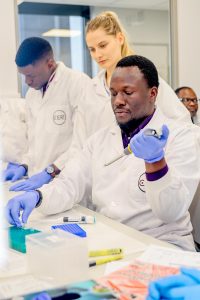
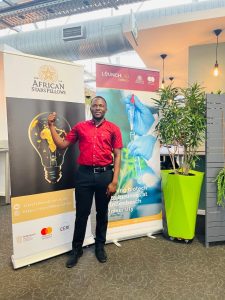
Growing up in rural eastern Uganda, Amusa was surrounded by questions that medicine couldn't yet answer. In his community – a disaster-prone area where fewer than one in two hundred children who enter primary school make it to university – people died from treatable diseases, and families turned to spiritual and cultural leaders for explanations that health workers couldn't provide. “These observations and experiences made me curious about the human body, how it works, and the underlying mechanisms of infectious diseases. To me, there has to be a better way.”
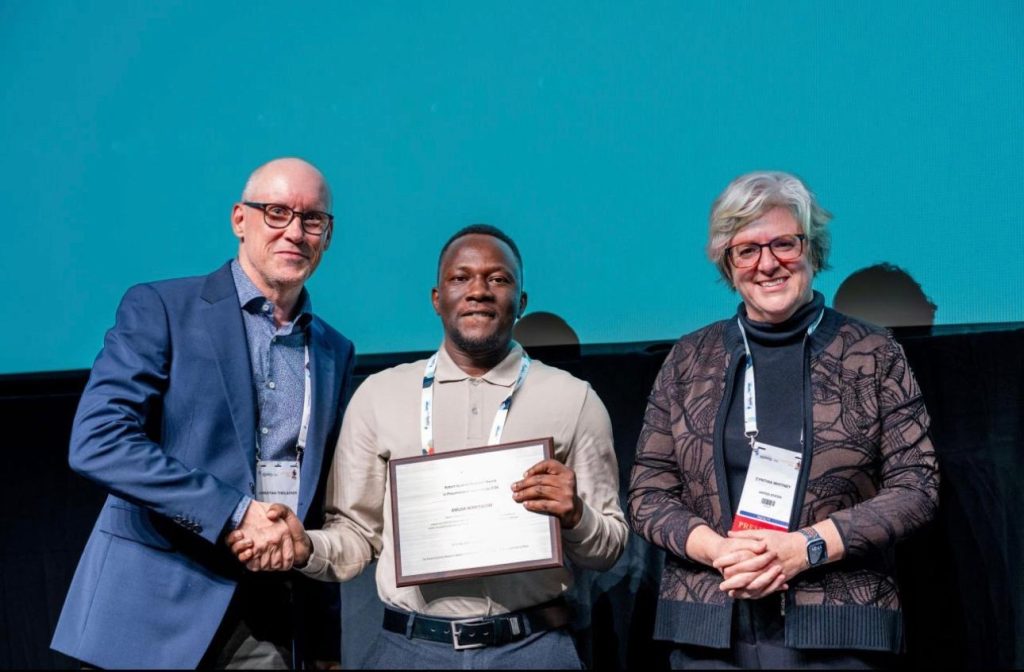
That curiosity has now taken him to a PhD in Clinical Sciences at the Liverpool School of Tropical Medicine, with his field research based at the Malawi Liverpool Wellcome Research Programme, and to one of the most competitive awards in global vaccinology. The Robert Austrian Research Award is given annually to just ten researchers worldwide working at the frontier of pneumococcal vaccinology, comes with up to 25 000 USD in research funding, and places Amusa among a select group of scientists whose proposals are judged among the most rigorous and impactful in the field globally.
“I had to read the email several times to believe it. This award represents not just personal achievement but validation that you can only fail when you haven't given it a go,” says Amusa. The first people he told were his research supervisors, mentors, and the African STARS Fellowship team. His family came next – because, as he puts it, this milestone reflects a path that once felt impossible from where he started.
Streptococcus pneumoniae, commonly known as pneumococcal disease, is a leading cause of child mortality, responsible for over 300 000 deaths annually among children under five, the vast majority in sub-Saharan Africa and Southeast Asia. Pneumococcal vaccines have saved millions of lives. But research from Malawi and South Africa has revealed a troubling pattern: some strains of the bacteria are evolving to dodge the vaccines designed to stop them.
This is known as ‘vaccine escape’, and it is precisely what Amusa’s research is designed to understand and ultimately counter. “My research looks at how pneumococcal strains with potential to escape vaccines spread within households and what level of immunity defines these. The findings will impact policy formulation that will ensure vaccines remain effective – and that children are truly protected, not just in theory, but in everyday life,” he explains.
Crucially, Amusa chose the household – not just the individual child – as his unit of study. In many African settings, a household of six members includes three-quarters who are children under five, all in constant close contact. Transmission doesn't happen in isolation; it happens in kitchens, sleeping spaces, and shared courtyards. “By focusing only on the individual child, we miss the bigger picture of how infections circulate within a household unit," he says. "Studying the household allows us to understand who is transmitting to whom, which immunity influences this, and where interventions can be most effective.”
The 25 000 USD award funding makes the depth of that research possible. It will support household sample collection, advanced laboratory analyses, and the integration of immunological data with transmission dynamics. And it will allow Amusa to train students and colleagues in the laboratory workflows his study demands.
“Without this support, my study would have been limited in scope and depth,” he says. “If successful, it will provide evidence to optimise how pneumococcal vaccines are used in high-transmission settings – and feed directly into vaccine implementation decision-making in Malawi, Africa, and globally.”
For a scientist of Amusa's calibre, the pull to take his career abroad is real. The incentives are well-documented: better infrastructure, more resources, more funding. “But the questions I care about are here. The burden of disease I want to address is here, and I can't address it by merely parking my bags and exiting,” he says. Staying on the continent allows him to work closely with affected communities, generate context-specific data, and contribute directly to strengthening local research systems – not parachute in and out with conclusions drawn elsewhere. That sense of grounded relevance, he says, is what keeps him rooted.
Amusa points to the African STARS Fellowship – delivered through CERI at Stellenbosch University and CARE at Institut Pasteur de Dakar, in partnership with the Mastercard Foundation – as the source of a specific and decisive shift in how he thinks and writes as a scientist. Not his biology, but his communication.
“The African STARS Fellowship taught me how to structure and communicate ideas with precision – to move beyond simply presenting data to telling a clear scientific story,” he says. “During grant proposal writing, I realised that scientific ideas have to be simplified, feasible, logically compelling and clearly impactful. That fundamentally changed how I write.”
He describes the shift in almost sensory terms: learning to read and write with his ears rather than his eyes – reading work aloud to hear whether arguments flow logically, whether complexity is obscuring meaning, whether the message lands. “I now read my work critically, almost as if I am explaining it to a five-year-old,” he says. “This helps me identify gaps in reasoning, avoid unnecessary complexity, and write more sharply, intentionally, and impactfully.”
It is a shift he believes contributed directly to winning the Robert Austrian Award – one of the most rigorous and competitive research funding processes in his field, globally.
Amusa sees his work as more than a research project. He sees it as a footprint – in pathogen vaccine-escape immune genetics, in the institution he works in, and in the imagination of young African scientists who are watching what becomes possible when someone from a similar background reaches a global stage. “Representation matters. Seeing someone from a similar African background succeed can shift what others believe is possible. That ripple effect is just as important as the science itself.”
To young African scientists, particularly young women, who hesitate before applying for internationally competitive awards, he is direct: “You are more ready than you think. Many of us underestimate our potential because we compare ourselves to systems with more resources. Start with what you have, and allow yourself to grow through the process. Your perspective, your context, and your work matter.”
Amusa says the award reinforces his sense of purpose. “It is not just recognition; it is a responsibility to receive, execute and deliver as promised. It opens a path for me as an early-career African scientist to lead cutting-edge research and contribute meaningfully to global health. It will strengthen my confidence and commitment towards building an impactful career that is rooted in addressing African health challenges.”
From a community in rural eastern Uganda, where the transition from primary school to university stands at half a percent, a global award in pneumococcal vaccinology is not a small thing. It is, as Amusa might put it, evidence that there is a better way – and proof that African scientists are finding it.
By Katrine Anker-Nilssen
Sources:
- Rafiki Thabo Foundation / https://www.worldbank.org/en/news/press-release/2013/11/19/quality-uganda-education-and-health-serv…
- https://www.dovepress.com/pneumococcal-disease-global-disease-prevention-strategies-with-a-focus-pe…
News date: 2026-06-17
Links:
KRISP has been created by the coordinated effort of the University of KwaZulu-Natal (UKZN), the Technology Innovation Agency (TIA) and the South African Medical Research Countil (SAMRC).


Location: K-RITH Tower Building
Nelson R Mandela School of Medicine, UKZN
719 Umbilo Road, Durban, South Africa.
Director: Prof. Tulio de Oliveira