
Social Science Unit
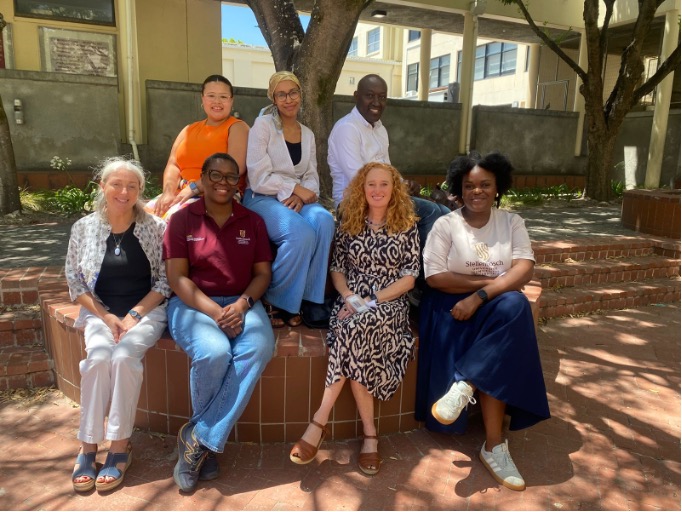
The SSU was officially launched at the CERI Strategic Meeting that took place on 30 January 2026, and is led by Dr Astrid Treffry-Goatley with Dr Gill Black as supporting lead. It brings together expertise across immunology, public health, ethnography, visual arts, communication, climate change, psychology, and political science.
The SSU responds to a critical gap: the need to embed social science within health research in ways that produce contextually grounded and impactful solutions. The objective of the unit is to advance a human-centred approach by addressing the socio-political, socio-economic, cultural and ethical dimensions of health research, explains Dr Treffry-Goatley.
In a changing global context, this integration becomes especially important. Health challenges are increasingly complex and interconnected. Addressing them requires collaboration across multiple disciplines and stakeholders. Funding expectations are also changing as major funders are placing growing emphasis on transdisciplinary research, recognising its greater impact, scalability and sustainability.
The SSU also strengthens institutional capacity at CERI by formalising social science within research programmes and enabling deeper integration across projects. The unit will:
- Co-develop competitive grant proposals.
- Lead and support social science components in funded projects.
- Build networks of local and international collaborators.
- Provide training in participatory methods, knowledge exchange, and policy translation.
A key example is the WEMA project: The impact of extreme weather events on the mental health of vulnerable populations in Africa. This project investigates the mental health impacts of extreme weather events across Africa.
Working across Mozambique, Kenya, South Africa, and Burkina Faso, the project uses participatory approaches to understand lived experiences and generate socially grounded evidence. The SSU team leads the social science and community engagement components, including the use of digital storytelling to capture personal narratives.
Throughout 2026, in collaboration with the Public Squares and African STARS Fellowship Programme, the unit will offer training opportunities focused on transdisciplinary research including co-production, stakeholder engagement, and creative methodologies.
By embedding social and ethical insight into health research, the SSU ensures that scientific advances are shaped by the lived realities of communities. The unit represents an important step toward more inclusive, responsive, and impactful research in Africa and positions CERI at the forefront of transdisciplinary innovation in global health.
Text: Ameera Crew
News date: 2026-04-09
Links:
KRISP has been created by the coordinated effort of the University of KwaZulu-Natal (UKZN), the Technology Innovation Agency (TIA) and the South African Medical Research Countil (SAMRC).


Location: K-RITH Tower Building
Nelson R Mandela School of Medicine, UKZN
719 Umbilo Road, Durban, South Africa.
Director: Prof. Tulio de Oliveira