
Beyond PSA: Why Better Prostate Cancer Diagnosis Must Include Africa
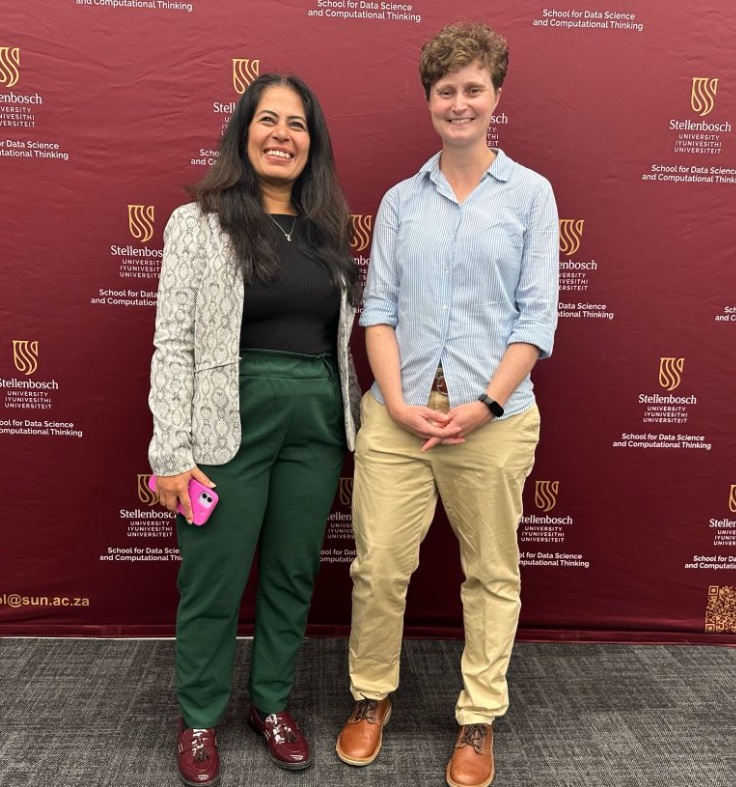
ABOVE: Professor Jyotsna Batra and Dr Margot Otto.
Text: Professor Jyotsna Batra, Professor of Genetics, Bond University, Australia
How do we find prostate cancers that threaten lives without putting other men through unnecessary tests and treatment?
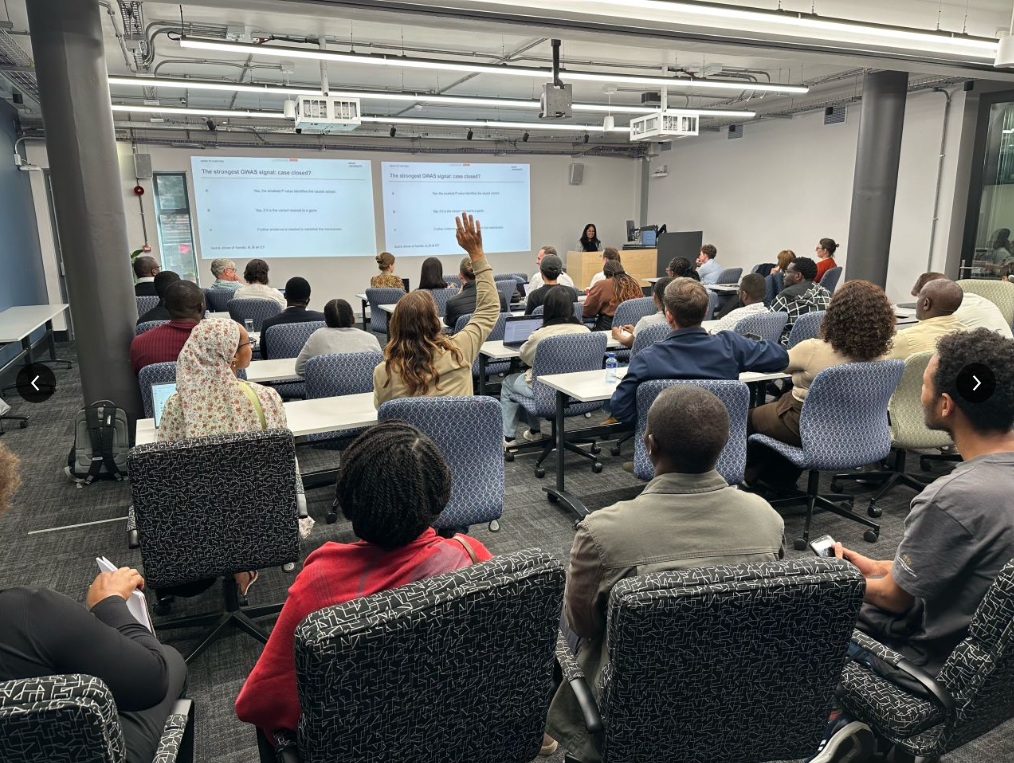
That question shaped my recent seminar at Stellenbosch University’s Centre for Epidemic Response and Innovation (CERI), kindly arranged by my friend Dr Margot Otto. It also connects to a broader challenge: ensuring advances in cancer diagnosis benefit the populations who need them.
As I explained recently in The Conversation, PSA is a prostate test, not a cancer test. Prostate-specific antigen is produced by both healthy and cancerous prostate cells. Levels can rise because of benign enlargement or inflammation, while some dangerous cancers produce relatively little PSA. Testing can therefore miss important disease or uncover cancers that would never have caused harm.
Our research explores how inherited DNA differences might help us read that signal more accurately. In a study published in Nature Communications in 2024, our international team investigated rs17632542, a variation in KLK3, the gene that encodes PSA. It was associated with lower PSA levels, yet among men with prostate cancer, it was also associated with more aggressive disease and a higher risk of prostate cancer death.
Experiments also showed that the altered PSA protein could promote cancer invasion and spread in laboratory and animal models. This suggests PSA is not simply a passive marker: its biological activity may help shape disease behaviour.
The aim is not to abandon PSA, but to interpret it more intelligently. Combining genetic information with PSA, family history, and clinical assessment could help guide who needs further investigation. For our approach, the next step is prospective clinical validation: establishing whether it improves decisions and outcomes in routine care.
For African populations, this raises an essential question: whose genetic information informs the test? Men of African ancestry face a disproportionate burden of aggressive prostate cancer, but Africa’s diverse populations remain underrepresented in genomic research. Findings from predominantly European-ancestry studies – including much of our own clinical evidence – cannot simply be assumed to apply across the continent.
Local validation must therefore be central, not an afterthought. We need African-led partnerships with researchers, clinicians, and communities to understand which biomarkers are useful, how they perform in different populations, and whether they can be delivered affordably alongside accessible diagnosis and treatment. Success should mean fewer avoidable investigations without overlooking cancers that need attention.
I hope this visit helps build those connections between Bond University and colleagues at Stellenbosch. For me, precision medicine is not just about a more sophisticated test. It is about giving more men a better chance of receiving the right care, at the right time, wherever they live.
Dr Margot Otto reflects on the seminar's personal and professional significance:
“Cancer research, particularly personalised medicine, is an area I am and always have been very passionate about, both professionally and personally. My family has been directly affected by prostate cancer, as my father was diagnosed with the disease a few years ago. It was interesting to learn about the promising advances in prostate cancer screening and to see how our understanding of the genetic factors influencing disease progression is progressing. I believe this research could improve early detection and reduce unnecessary interventions and the associated costs.”
– Dr Margot Otto

ABOVE, from left: Professor Tulio de Oliveira, Director of CERI; Margitt Hengstberger; and Dr Rupert Ecker, CEO of TissueGnostics GmbH.
News date: 2026-11-04
Links:
KRISP has been created by the coordinated effort of the University of KwaZulu-Natal (UKZN), the Technology Innovation Agency (TIA) and the South African Medical Research Countil (SAMRC).


Location: K-RITH Tower Building
Nelson R Mandela School of Medicine, UKZN
719 Umbilo Road, Durban, South Africa.
Director: Prof. Tulio de Oliveira