
Why One Health Cannot Be Optional
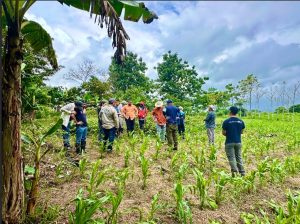
Above: Researchers from the University of Florida, New Mexico State University, and Gorgas Memorial Institute for Health Studies traveled to Darien, Panama to learn about sustainable farming practices from local organisation Darien Sostenible in June 2024.
I think one of the most important things to understand about One Health is that human health cannot really be separated from the health of animals and the environment, says Prof Mavian. Many emerging infectious diseases are not random events they are often linked to how we change landscapes, interact with wildlife, manage agriculture, and respond to climate change.
That perspective underpins AgroEcoHealth, an international research initiative exploring how agricultural and environmental change shape vector-borne disease risk. The project brings together expertise across genomics, ecology, epidemiology, entomology, and public health to study the links between farming systems, biodiversity, mosquitoes, wildlife, livestock, and human disease.
Prof Mavian joined the initiative while working at the University of Florida, drawn by the opportunity to explore how ecological disruption influences viral transmission and evolution. I was particularly interested in understanding the ecology of viruses in these environments and how factors such as deforestation, humananimal interactions, and climate change can influence viral transmission and evolution, she explains.
Her role within AgroEcoHealth focuses on linking pathogen genomics, phylogenetics, and phylodynamics with ecological and epidemiological data to track how arboviruses evolve across changing landscapes. My expertise is particularly valuable in understanding how arboviruses evolve across changing environmental and agricultural landscapes, and how these evolutionary processes may increase the risk of spillover in humans and animals, she explains.
The work builds on years of research at the intersection of genomics and public health. One of Prof Mavians previous studies identified rapid evolution and amplification of Everglades virus in the Florida Everglades, highlighting how ecological and climatic pressures can shape viral adaptation and transmission dynamics.
For her, AgroEcoHealth represents an important shift in infectious disease science from reacting to outbreaks after they occur toward identifying risk earlier. What excites me most about AgroEcoHealth is the opportunity to study arboviral emergence as part of a broader ecological system rather than only from a clinical or outbreak perspective, she says. By combining genomic surveillance with landscape and ecological data, we can start identifying the environmental conditions and transmission interfaces that may favor viral amplification, adaptation, or spillover into humans and animals.
She adds that the long-term goal is to move toward prediction and preparedness. In many ways, this project allows us to move from reactive genomics, understanding outbreaks after they occur, toward more predictive approaches aimed at identifying risk before widespread transmission occurs.
At CERI, Prof Mavians work forms part of a broader One Health strategy combining genomics, epidemiology, ecology, and public health to strengthen surveillance and preparedness systems across Africa.
This project aligns very closely with CERIs broader mission of combining genomics, data science, and collaborative research to better understand and respond to emerging infectious diseases, she says. By combining field ecology, genomics, and public health perspectives across institutions and countries, it contributes to developing more coordinated surveillance systems that can detect and anticipate emerging disease threats.
A defining feature of AgroEcoHealth is its strong emphasis on community engagement. Rather than treating communities simply as research sites, the project is designed around collaboration and participation.
Dr Amy Vittor, principal investigator within AgroEcoHealth, describes the research as a feedback loop. We learn about the linkages between farming and health as we engage with farmers, who in turn help shape the relevant research questions, she says. Doing our best to understand the lived experience of the study participants is crucial if we hope to have a positive impact.
Those conversations have already influenced the direction of the research. Farmers shared how short-term land leases driven by housing development pressures discourage long-term environmental investment, while local ecological knowledge introduced researchers to practices such as using guinea fowl for tick control and native beauty berry plants as mosquito repellents. Our team learns so much from our study participants, and we incorporate this back into new research questions and recommendations, says Dr Vittor.
For both researchers, this type of cross-sector work is becoming increasingly urgent as climate change, agricultural expansion, urbanisation, and ecological disruption continue reshaping ecosystems globally.
Prof Mavian notes that many regions, particularly across Africa, are simultaneously experiencing rapid environmental and climatic change while surveillance systems are still developing. Integrating ecology, genomics, entomology, and public health allows us not only to detect pathogens, but also to understand the environmental and evolutionary processes that may drive spillover and amplification before large outbreaks occur, she says.
Dr Vittor believes One Health research also needs to become more solution-driven and participatory. There is a large need for research that is explicitly designed with solutions in mind, she says. That means building in participatory approaches that bring affected communities to the table, and committing to translating findings into practical guidance.
For more information, click here
photos: AgroEcoHealth
text: Katrine Anker-Nilssen

Above, left: Postdoctoral fellow Dr Caleb Stica and research coordinator Athena Chlapowski recruiting farmers for the Florida Agroforestry project at an agriculture exposition in Fort Myers, FL, USA (April 2026).
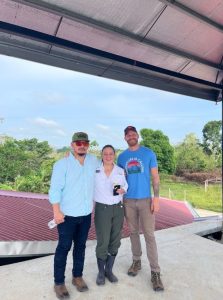
Above, right: Researcher Dr Jean Paul Carrera, principal investigator Dr Amy Vittor, and postdoctoral fellow Dr Caleb Stica, visiting the construction of the Carson Center in Darien, Panama (April 2025).
News date: 2026-05-27
Links:
KRISP has been created by the coordinated effort of the University of KwaZulu-Natal (UKZN), the Technology Innovation Agency (TIA) and the South African Medical Research Countil (SAMRC).


Location: K-RITH Tower Building
Nelson R Mandela School of Medicine, UKZN
719 Umbilo Road, Durban, South Africa.
Director: Prof. Tulio de Oliveira