
Next Step: Oxford
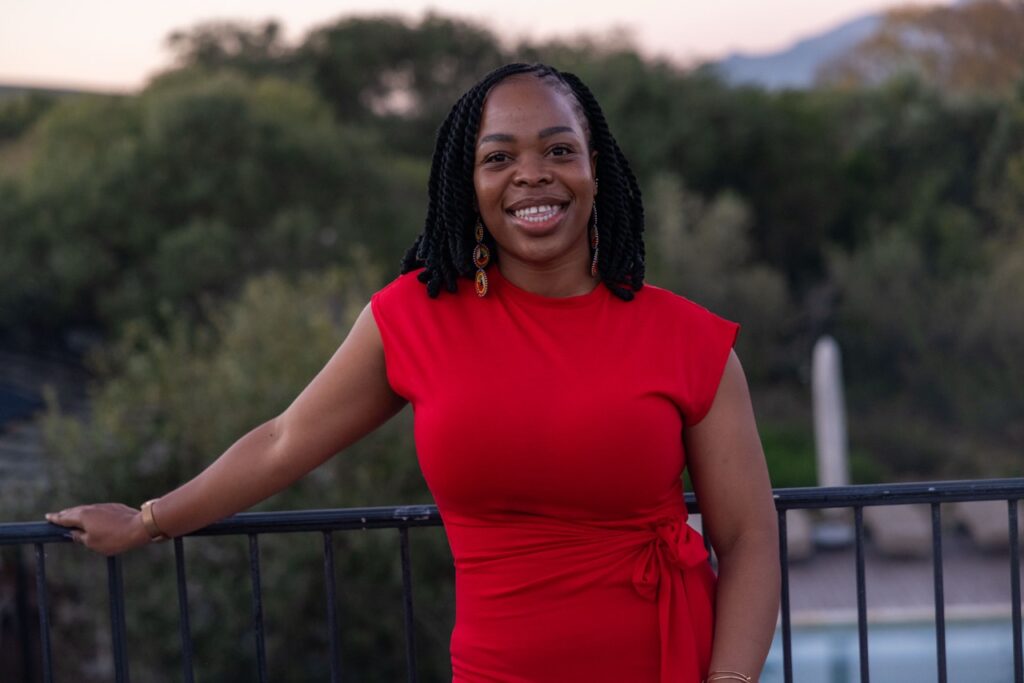
When Fezokuhle Khumalo received the news that she had been accepted to pursue a DPhil at the University of Oxford, the moment was deeply personal. Oxford had not initially been part of her plan; she had not considered applying until a potential supervisor at another institution encouraged her to do so. âWhen the offer arrived, it affirmed that the years of work, sacrifice, and quiet perseverance had not been in vain,â she says. âEven the seasons in which the way forward felt unclear had been shaping and preparing me in ways I could not yet recognise.â
Her path to Oxford has been shaped by a gradual movement from the laboratory towards the realities of health systems. Her first masterâs degree, in Medical Virology at the University of Cape Town, helped her understand how health innovations and evidence are generated. Her second, in Epidemiology specialising in Implementation Science at the University of the Witwatersrand, drew her closer to a question that increasingly interested her: what happens when an effective intervention leaves the research environment and must reach people through routine healthcare?
Her work with Georgetown Universityâs Center for Global Health Practice and Impact in Eswatini brought that question to life. âI began to understand that even the most sophisticated intervention has limited value if it cannot reach the person for whom it was designed,â she says. Receiving an early-career research grant from the Royal Society of Tropical Medicine and Hygiene was another turning point, allowing her to move from supporting research to leading her own study and begin seeing herself as an independent researcher.
At CERI, several strands of that journey began to come together. Through the African STARS Fellowship, Fezo encountered maternal anaemia as a research focus and recognised how closely it connected her scientific background, experience of frontline health systems and growing interest in implementation. âIn many ways, this has become the meeting point of those different parts of my story, and ultimately helped shape the direction that has led me to Oxford,â she says.
The experience also changed how she thought about what a scientist could be. âMy time at CERI through the African STARS Fellowship awakened an innovative side of me that I had not fully recognised before,â she says. Rather than only understanding and describing health problems, she began asking what could be built to address them and how scientific ideas could become practical, sustainable solutions.
Exposure to accomplished researchers, innovators and entrepreneurs broadened that sense of possibility. âThese were not distant figures whose careers felt impossible to emulate; they were people who had also started with curiosity, an idea and the courage to pursue it,â she says. âThat made ambitious scientific careers feel more tangible to an ordinary young woman from the small Kingdom of Eswatini.â
Perhaps the biggest shift was in her confidence. âWhen I arrived, I did not always see myself as someone who could generate bold ideas, lead research or contribute meaningfully in rooms with highly accomplished scientists,â Fezo says. Being trusted with opportunities, supported by mentors and challenged to stretch beyond what felt familiar gradually changed that. âCERI helped me move from wondering whether I belonged in these spaces to understanding that I also have something worthwhile to contribute.â
That confidence found a practical outlet in SmartPath, a health-systems catalyst company Fezo co-founded through the fellowship. Bringing together community, science and technology, SmartPath aims to improve care pathways, beginning with maternal anaemia. Developing it showed Fezo that she could move beyond identifying a health-system problem to working with a multidisciplinary team to develop solutions, engage communities and stakeholders, and translate an idea into a practical model for care.
It also helped strengthen her Oxford application. âBefore the fellowship, I sometimes expected good work to speak for itself,â she says. âAfrican STARS taught me that we also need to know how to position our ideas, present our achievements and tell a compelling story about the contribution we are capable of making.â SmartPath gave substance to the research direction she presented to Oxford by showing that it was grounded in work she had already begun leading.
Fezo is also conscious that journeys such as hers depend on more than talent and hard work. âOne of the greatest barriers has been access,â she says. âNot necessarily a lack of ability or ambition, but limited access to the networks, funding, mentorship and information that help turn potential into opportunity.â Coming from Eswatini has meant learning to navigate what she calls academiaâs âinvisible curriculumâ â knowing where opportunities lie, how to approach mentors, build collaborations and recover from rejection. âI have learned that talent matters, but people also need someone to open a door, explain the room and, eventually, trust them to take their place within it.â
At Oxford, Fezo will pursue her DPhil within the Nuffield Department of Medicine, joining the Health Systems Collaborative research group in the Centre for Global Health Research. Her research will focus on strengthening maternal healthcare in African health systems, particularly how evidence-based interventions can be adapted into routine care across different contexts.
âHaving strong evidence that an intervention works is only part of the journey,â she says. Health systems differ, as do healthcare workers, facilities, communities and the women receiving care. Her interest lies in understanding what should be adapted, what needs to remain unchanged and which contextual factors can help or hinder implementation â ultimately helping to make effective interventions feasible, acceptable and sustainable within the settings they are intended to serve.
Fezo hopes to deepen her expertise in implementation science, mixed-methods research, co-design, and the evaluation and adaptation of complex health-system interventions, while building relationships across her Oxford and African networks. âI hope Oxford will equip me to become a two-way conduit between the Global North and Global South, not simply transferring knowledge in one direction, but connecting expertise, questions, resources and lived health-system realities across contexts.â
She also intends to remain actively connected to CERI throughout her DPhil, particularly through SmartPath. âBecause my research will remain grounded in African health-system priorities, I see CERI and Oxford as connected parts of the same journey rather than separate chapters.â
Ultimately, Fezo wants to become a scientist who can move between research, health systems, communities and innovation while helping to build African-led solutions that influence policy and service delivery. But she also wants the opportunities she has received to create opportunities for others. âAfrica has no shortage of talented and curious young scientists, but talent does not always meet opportunity,â she says.
Her own journey has shown her what can happen when someone recognises potential and creates room for it to grow. âI am a product of this, where others ahead of me saw me, saw my potential, and opened doors for me.â
Now, as another door opens at Oxford, she is thinking about those who will follow. âMost importantly, I want to become the kind of scientist who opens doors, builds collaborative teams and creates room for other peopleâs ideas to flourish.â
text: Katrine Anker-Nilssen photos: CERI Media, Charlie Sperring
News date: 2026-09-03
Links:
KRISP has been created by the coordinated effort of the University of KwaZulu-Natal (UKZN), the Technology Innovation Agency (TIA) and the South African Medical Research Countil (SAMRC).


Location: K-RITH Tower Building
Nelson R Mandela School of Medicine, UKZN
719 Umbilo Road, Durban, South Africa.
Director: Prof. Tulio de Oliveira