
Innovation Doesnât Happen in Silos

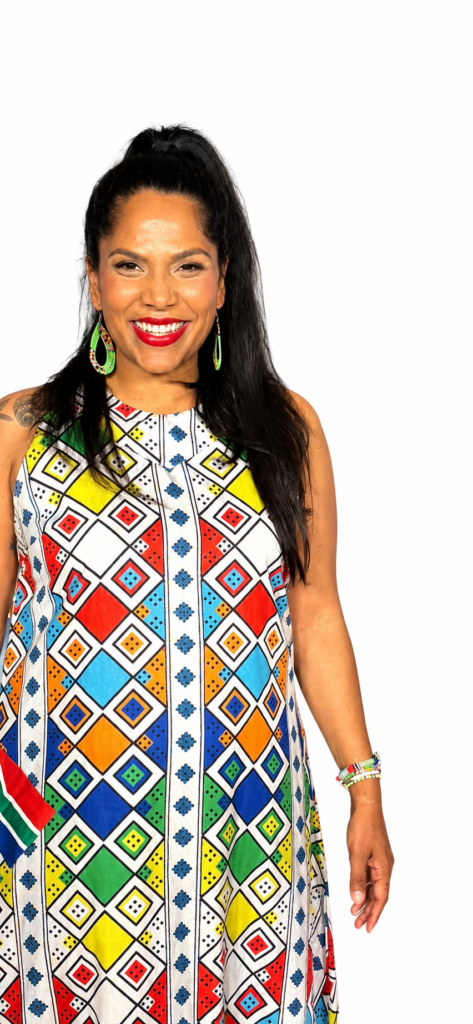
My professional journey has always been rooted in people, place, and possibility. Iâve spent much of my career at the intersection of community development, entrepreneurship, and placemaking, asking one simple question: what becomes possible when communities are treated not as beneficiaries, but as partners, experts, and creators of their own futures?
For several years, I led Philippi Village in Cape Town, a community-led development and entrepreneurial hub in one of the cityâs most underserved communities. Philippi taught me that meaningful development is rarely neat or linear. It requires patience, relationships, and the ability to hold many different realities at once â bringing communities, entrepreneurs, government, funders, and civil society to the same table, while making sure that the people closest to the problem are still heard.
It also taught me one of the most important lessons of my career: how we engage matters as much as what we deliver. Iâve lost count of the times listening properly changed a projectâs outcome, reshaping designs and surfacing risks before they became crises. The more we listen, the more we build trust â and trust is one of the most important currencies in any kind of meaningful change.
Thatâs the lens Iâm now bringing into a different, exciting world. Over the past few months, Iâve worked increasingly closely with Prof Tulio de Oliveira and the SWEAT Africa team. What a team! I immediately felt welcome and inspired. Iâve been helping them think through a new lens for SWEAT Africa: a stream of social impact innovation with a specific focus on township tech.
Iâll admit that entering the CERI environment initially felt intimidating. Iâm not an academic or a scientist. I come from communities and township entrepreneurship, and suddenly I was surrounded by researchers working at the frontiers of innovation. But the more time Iâve spent with the team, the more struck Iâve been by how open people are to learning across disciplines, and how willing they are to challenge who gets to be part of innovation.
Thatâs where SWEAT Africa becomes important to me. Innovation doesnât happen in silos. A brilliant discovery or an exceptional idea is only ever as valuable as its connection to the people, systems, capital, and trust around it.
Our innovation and investment systems have never been designed equally. Where you come from, who you know, and access to the right rooms can determine which ideas get seen. What sits around an idea often matters as much as the idea itself: the context, the community knowledge, the moment a scientist meets an entrepreneur, or an investor hears directly from the people living the problem.
I believe SWEAT Africa can become far more than a conference: a meeting place for science, entrepreneurship, investment and lived experience, where people who would never ordinarily meet can sharpen each otherâs thinking. I hope to bring a township and community lens to SWEAT Africa, asking who isnât in the room, what an idea would look like in Khayelitsha or Philippi, what non-financial risks need to be weighed, and what those communities could teach us in return.
Iâm incredibly grateful for the opportunity to bring that perspective into a team that is already so open to thinking differently about how innovation is shaped, shared, and understood.
One of the conversations already emerging within the CERI and SWEAT Africa team is around storytelling. Creativity, collaboration, and meaningful engagement arenât add-ons. They strengthen research, broaden its relevance, and build the trust that makes real impact possible.
Communities are too often researched, documented, and spoken about by other people, their lives reduced to case studies interpreted through somebody elseâs lens. Yet listening isnât just about representation: it improves the work itself, informing design and building trust from the start rather than as an afterthought. Iâll be sharing some of these lessons on stakeholder engagement and trust-building with the new African STARS cohort next month.
Iâm particularly excited about bringing this storytelling component into SWEAT Africa 2027.
Weâre imagining training young mobile journalists to move through the event, capturing conversations, ideas, and connections as they happen, and giving researchers, entrepreneurs, and communities another way to tell their own stories. Iâd also love to explore working with public artists and graffiti artists to interpret what theyâre hearing across the event in real time.
For me, that creates another layer of information â almost another kind of data set â capturing not only what people presented, but what they were thinking, questioning, feeling, and connecting. It feels like a powerful way to document innovation as a living process, rather than only recording the final outcomes.
Many of these lessons are also shaping work Prof Tulio de Oliveira and I are building together: TRUST AFRICA, an NPC exploring new ways to support entrepreneurs shaping social innovation from outside traditional investment systems, through an outcomes-based recoverable grant model with a township tech focus.
At its centre is a simple provocation: what if trust itself were a form of currency? Traditional capital asks entrepreneurs to fit the system; we believe the system should fit the entrepreneur. TRUST AFRICA exists to build that bridge, with capital that understands context and support that fits.
The future of innovation may look less like one brilliant person with the answer and more like an ecosystem, where the ability to connect, listen and hold complexity isnât peripheral, but central.
Because increasingly, I believe the future belongs to people who can connect what others keep separate.
News date: 2026-09-03
Links:
KRISP has been created by the coordinated effort of the University of KwaZulu-Natal (UKZN), the Technology Innovation Agency (TIA) and the South African Medical Research Countil (SAMRC).


Location: K-RITH Tower Building
Nelson R Mandela School of Medicine, UKZN
719 Umbilo Road, Durban, South Africa.
Director: Prof. Tulio de Oliveira